

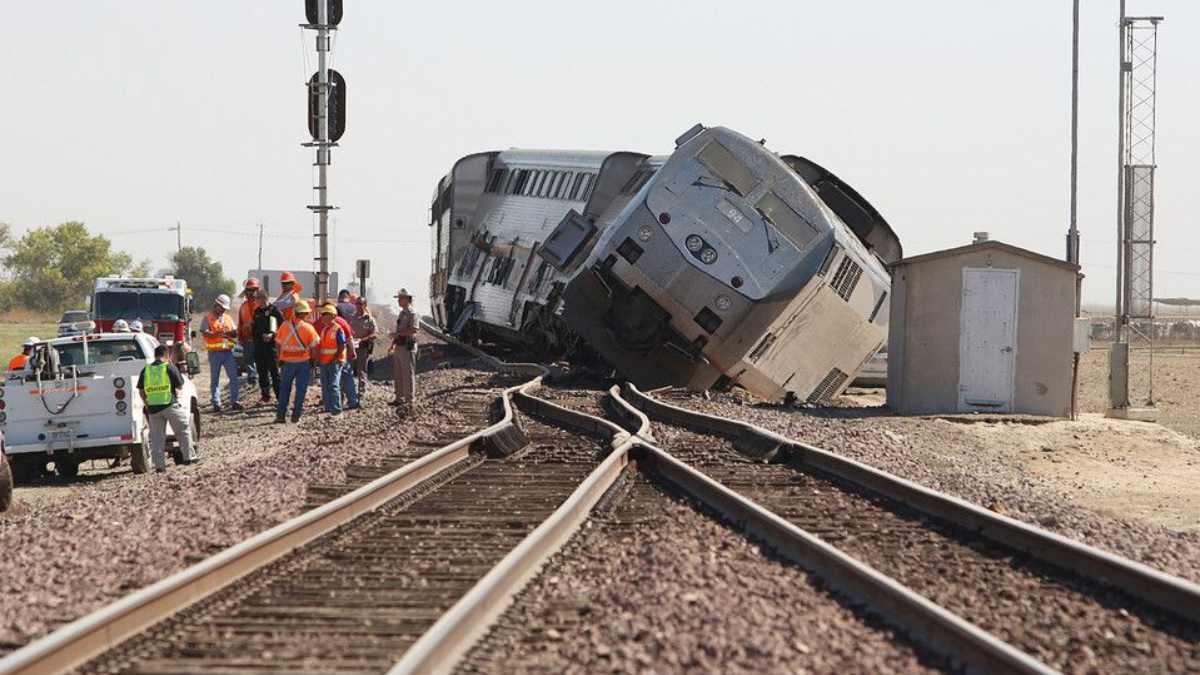
At least 13 and dozens more passengers have been killed and injured in a passenger train crash in southern Mexico, which dealt a blow to one of the symbolic infrastructure projects in the country and brought the safety, governance and strategic ambition to global attention.
The accident happened on Sunday in the Oaxaca state, when a train in the Interoceanic Corridor line derailed off the tracks as it travelled through a remote part of an Isthmus known as Tehuantepec.
Difficult terrain caused emergency services to get to the site hours later. Federal officials verified that the number of the injured who went to hospitals in Oaxaca and other neighbouring states was in the many. The government announced a state of mourning and announced that all the support would be given to the families of the victims. A formal enquiry into the cause of the derailment has been inaugurated.
The train was running on a route that was at the centre of the scheme by Mexico to modernise its southern areas and redefine its position in the global trade. Interoceanic Corridor is meant to serve ports located on Pacific and Atlantic coasts by rail, road and industrial hubs. It has been sold as an alternative strategic solution to cargo transport and regionalization and as the icon of state-directed development.
The derailment has thus had a heavier burden than the tragedy itself. Other global partners and investors have been keeping track of the project as part of a global supply chain change. Companies and governments are finding alternative paths that would lead to less reliance on the maritime Passages which are busy and enhance resilience. The corridor has been proposed by Mexico as one of such solutions.
The incident puts the federal government in a delicate situation politically. The new President, Claudia Sheinbaum, who assumed office this year, has committed to continuity on big infrastructure, although she will be more vigilant and more transparent.
The derailment has also created the urge to re-examine the opposition parties which are questioning standards of safety, the practice and use of maintenance and the role of the armed forces in the management of civilian transport projects.
The response will be of as much concern as the findings, diplomatically. The credibility of Mexico as a logistics and investment partner is pegged on the belief of its capacity to safely and effectively execute large projects. The foreign governments, multilateral lender and private investors will monitor clear communication, independent investigations and visible corrective action.
The tragedy is also an indication of a greater predicament that exists in emerging economies that pursue the creation of a massive infrastructure within a strict schedule. The issue of speed, cost and safety has become a world wide concern whether it is rail networks of Asia or ports and corridors of Latin America and Africa. Defeats may swiftly destroy years of diplomatic and economic positioning.
The derailment is a challenge to the leadership of Mexico as the recovery efforts are proceeding and the investigation is going on. Its result will not only determine domestic discourse but also the perception of the country at a time when infrastructure is going to be more addicted to outside power, trade confidence and strategic trust.