
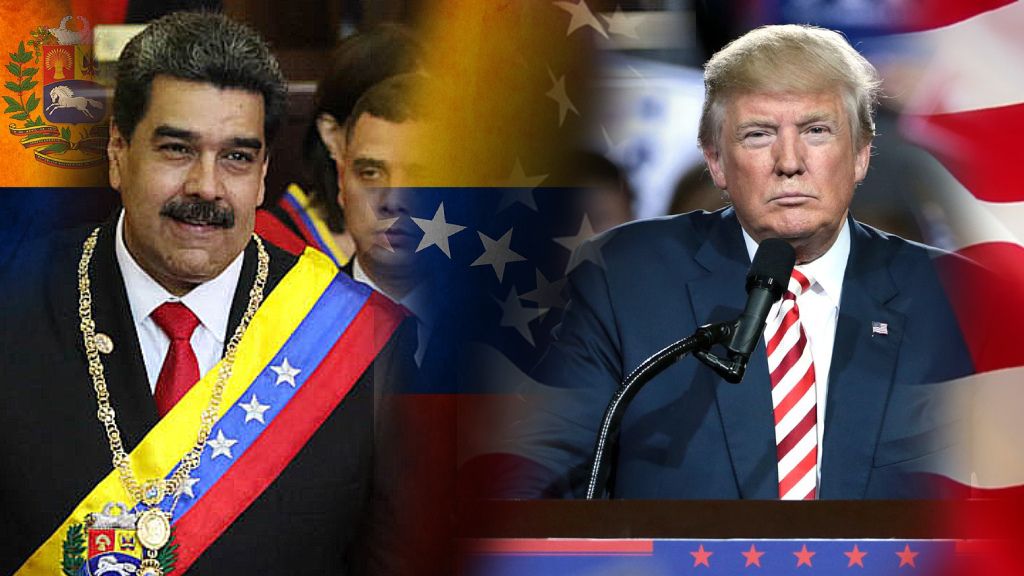
Early on January 3, 2026, the United States launched a military operation in Venezuela that resulted in the capture of President Nicolás Maduro and his wife, Cilia Flores. On social media, President Trump declared that the United States had launched a large-scale strike, captured Maduro, and flown out of the country to face charges. Maduro was brought to New York and imprisoned in Brooklyn when he appeared in US court. Maduro, who has been charged with cocaine trafficking and narco-terrorism in the Southern District of New York, was the target of the raid, according to U.S. sources. Vice President Delcy Rodríguez of Venezuela, who was appointed interim president by the Supreme Court, condemned the attack as “illegal kidnapping” and called for Maduro and Flores’ “immediate release.” Declaring Maduro to be “the only president of Venezuela,” she called for mass mobilization to thwart the assault.
Timeline:
Important Developments:
Early on January 3, U.S. forces reportedly destroyed electricity and air defenses at Venezuelan locations close to Caracas. Trump declared that the attack had been successful and that Maduro had been apprehended. The Venezuelan leaders were subsequently transported to a detention facility in Brooklyn by U.S. convoy. Later on January 3, Trump announced at a news conference that he would “run the country until a safe, proper, and judicious transition” in Venezuela. Defense Minister Vladimir Padrino Lopez stated that some of Maduro’s bodyguards were killed “in cold blood” during the attack, and the Venezuelan military acknowledged Lopez as acting leader.
Jan. 4: Trump warned reporters that if Venezuelan officials did not comply with U.S. efforts to “open up” the oil business and halt drug trafficking, he could order a second strike. “We’re taking back what they stole…we’re in charge,” he declared, threatening to use force if Colombia and Mexico failed to stop drug trafficking. Maduro is still the only legitimate leader of Venezuela, according to those in his cabinet who are still outside of him. They referred to the U.S. capture as an act of “aggression” and “kidnapping.”
Maduro’s arraignment was set on January 5 in federal court in the United States. According to US law, he is accused of cocaine importation and narco-terrorism. His first appearance will be heard by a judge in Manhattan. Due to Maduro’s denial of any wrongdoing and claim of diplomatic immunity, observers pointed out that it might take months before a trial. International organizations planned talks on the legality of the U.S. move and its effects on the region in the meantime
U.S. Court Proceedings and Charges
Maduro is accused of operating a state-sponsored cocaine trafficking network in a U.S. indictment. He allegedly plotted to flood the United States with cocaine for decades with violent organizations and large drug cartels, according to the prosecution. He is accused with narco-terrorism, conspiracy to import cocaine, and related weapons counts in the unsealed indictment. A sentence of decades to life in prison is possible for each crime. Maduro has consistently denied any criminal activity; the U.S. Justice Department claims that its drug case began in 2020. U.S. authorities dispute Maduro’s claim of head-of-state immunity in court, characterizing him as a “dictator” without legal authority. Neither Maduro nor Flores were known to have attorneys present at the Manhattan court; the judge will determine the terms of any bail (U.S. media indicated he is expected to remain incarcerated). Although the administration presents the operation as law enforcement in order to file narcotics charges, analysts point out that this is the first time a sitting leader has been apprehended overseas for prosecution in the United States. Legal experts note that drug smuggling into the United States is typically not seen as a “armed attack” that warrants military action. They point out that the U.S. move broke the customary immunity of a foreign head of state and was not approved by the U.N. Security Council or Venezuela. The U.N. secretary-general consequently issued a warning that the raid established “A dangerous precedent.” The EU also emphasized that any change in Venezuela must respect both the Venezuelan people’s will and international law.
Trump’s Public Statements and U.S. Position
The operation was presented by President Trump and his administration as a final blow against drugs and a despotic government. Trump declared that big American oil firms would rebuild Venezuela’s infrastructure and “take back what they stole.” “We will run the country until a safe, proper, and judicious transition” to a new government, he declared during a press conference in Mar-a-Lago. When asked about American forces in Venezuela, Trump responded, “We’re not afraid of boots on the ground.” He specifically warned on January 4 that if the remaining Venezuelan leaders do not assist U.S. attempts to open the oil sector and stop drug trafficking, “another strike” would occur. “Operation Colombia sounds good to me,” he joked to reporters, adding that Cuba “looks like it’s ready to fall.” Additionally, the administration prioritized criminal justice. “The tyrant is gone,” said Christopher Landau, the deputy secretary of state. He will now, at last, be held accountable for his misdeeds. Attorney General Pam Bondi stated that Maduro would soon face “the full wrath of American justice on American soil” after law Department officials published images and recordings of him in jail while wearing a blindfold. Congressional Democrats have denounced the raid as dangerous and called for a detailed post-operation plan, claiming they were briefed on but not fully aware of the plot.
Venezuelan Government Reaction
The attack was condemned as a criminal act by Maduro’s government and allies. Speaking on state television, Rodríguez described the operation as a “barbaric” and “illegal and illegitimate kidnapping” of the president. She urged people to band together in “resistance” against what she described as “imperialist aggression” and demanded quick verification that Maduro and his wife are still alive. “There is only one president Nicolás Maduro and no one should fall for the enemy’s provocations,” declared Interior Minister Diosdado Cabello, a supporter of Maduro.
During the raid, U.S. forces killed soldiers, civilians, and members of Maduro’s guard “in cold blood,” according to Defense Minister Padrino Lopez on national radio. He declared that all of Venezuela’s armed forces were ready to preserve the country’s sovereignty. A national “State of External Disturbance” was proclaimed in government announcements, and all civilians and armed forces were urged to fight the “imperialist” invasion. This line was reinforced in government department social media posts, one of which accused Washington of trying to take Venezuela’s minerals and oil.
Simultaneously, Rodríguez offered a cautious message regarding dialogue, stating that Venezuelans “deserve peace and dialogue, not war” and inviting the United States to “collaborate with us on an agenda of cooperation” on January 4. This demonstrated her practical approach while maintaining her insistence on Maduro’s legitimacy. (U.S. authorities pointed out that she is subject to penalties for undermining democracy.) Since then, Venezuela’s Supreme Tribunal has approved Vice President Rodríguez as interim president (as required by law when a president is disabled), but she has also publicly pledged to protect “our independence” and stated that she will maintain Maduro’s name as head of state.
Regional and International Responses
Reactions were sharply varied throughout Latin America and beyond. Outrage was expressed by left-leaning leaders: Gustavo Petro, the president of Colombia, pledged to request a meeting of the UN Security Council and denounced the aggression as a threat to peace. Claudia Sheinbaum, the president of Mexico, denounced the attack as a “military intervention” that goes against the UN Charter. According to Lula da Silva of Brazil, the attack went beyond “an unacceptable line.” Gabriel Boric, the president of Chile, reminded everyone that using force is forbidden by international law and urged a peaceful, negotiated settlement. Cuba, a regional supporter of Venezuela, condemned the U.S. raid as “state terrorism.”
On the other hand, those governments that are favorable to the United States welcomed Maduro’s removal. Libertarian President Javier Milei of Argentina described it as a “historic” event, José Kast, the next right-wing president of Chile, applauded the overthrow of “a dictator,” and Daniel Noboa, the president of Ecuador, declared that it was time for the “narco-chávistas” to be held accountable.German and other European officials exercised caution, emphasizing that any transition must adhere to international law and the wishes of the Venezuelan people. Maduro has lost legitimacy, according to Germany’s foreign minister and EU foreign policy chief Kaja Kallas, who also emphasized the need to “uphold the UN Charter and international law” and pursue a peaceful democratic transition.
Major powers and the United Nations expressed alarm on a global scale. Even if Maduro is dictatorial, invading a sovereign state creates “a dangerous precedent,” according to U.N. Secretary-General António Guterres, who expressed his “deep alarms.” The U.S. use of force “violates international law and Venezuela’s sovereignty,” and China’s foreign ministry said it was “deeply shocked” and “strongly condemns” it. Trump’s action was deemed “illegal” by Russian officials, and one lawmaker compared it to imperialism from the 19th century. The strikes were denounced by Iran’s government as “military aggression” in violation of the UN Charter A distinct perspective was given by American advocates in Washington: Declaring, “The tyrant is gone,” Acting Deputy Secretary Landau praised the operation as justice for the victims. He will now, at last, be held accountable for his misdeeds.