

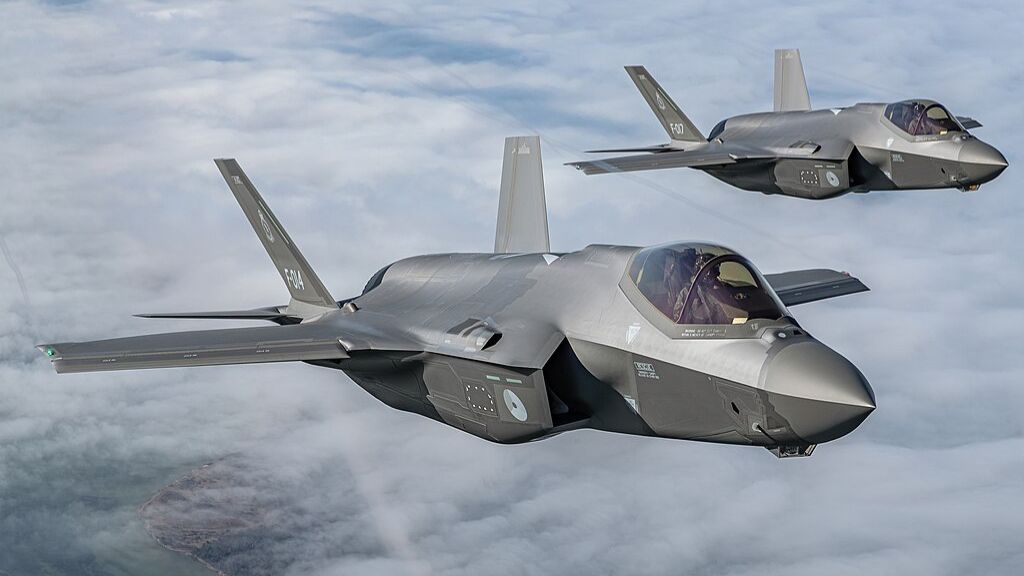
On January 5, Recep Tayyip Erdoğan, the president of Turkey, reaffirmed Ankara’s demand to rejoin the U.S.-led F-35 fighter jet program, describing its return as “important and necessary” for NATO’s defense. He called Turkey’s 2019 ejection from the international F-35 project “unjust” and claimed that obtaining the cutting-edge aircraft “for which it has already paid” would improve relations with Washington and “strengthen the security of NATO”. Erdoğan’s remarks, which he made in response to Bloomberg News, coincide with high-level talks between the United States and Turkey and conjecture that the government of President Donald Trump, who is currently serving a second term, is more amenable to settling the conflict. Erdoğan stated that he personally brought up the F-35 problem with Trump during their September White House meeting, citing Trump’s statement that Washington was “very seriously” considering supplying F-35s to Turkey.
Background – Removal from F-35 Program and Its Causes
After accepting delivery of Russia’s S-400 surface-to-air missile system in 2019, Turkey was formally kicked out of the F-35 Joint Strike Fighter program. The S-400 cannot be incorporated into alliance air-defense networks, as U.S. and NATO officials have long warned. The White House declared unequivocally in July 2019 that Turkey’s acquisition of the S-400 “renders its continued involvement with the F-35 impossible,” since Russian radar and data might jeopardize the aircraft’s sensors and stealth. Turkey “cannot have both the Russian system and the fifth-generation fighter,” according to Pentagon officials. In 2020, Jens Stoltenberg, the secretary-general of NATO, cautioned that “the S-400 cannot be integrated into NATO’s air and missile defense system” and advised Turkey to look for other options.
Reuters reports that Washington withdrew Turkey from the F-35 program and “imposed sanctions on its NATO ally Ankara in 2020” over the S-400 acquisition. Prior to the separation, Turkey had produced hundreds of F-35 components and intended to purchase roughly 100 aircraft, making it both a customer and an industrial partner.
The United States said that it was legally impossible to stay in the program without getting rid of the S-400s.
Although Turkish officials recognize that U.S. law would prohibit Turkey from operating F-35s if the Russian missile system persists, they have denied reversing the S-400 purchase and claimed the batteries would not be linked to NATO.
Allied F-35 partners were forced to shift Turkish production work to other vendors as a result of Turkey’s exclusion. The suspension of Turkish participation would be finished by March 2020 with no effect on total F-35 deliveries, according to a 2019 Pentagon briefing. However, U.S. officials emphasized that the disagreement was exclusive to the jet program and “should not impact the broader NATO alliance,” and that alliance exercises and military ties between the United States and Turkey will continue.
Erdoğan’s Push for Re-Entry and U.S. Signals
Erdoğan’s fresh public effort coincides with the resumption of U.S.-Turkish negotiations. In December 2025, Trump confidant Tom Barrack, the U.S. ambassador to Washington, stated that the country is “in ongoing discussions” with Turkey regarding reentering the F-35 program and expressed optimism for “a breakthrough in the coming months.” He specifically mentioned the legal obstacle: if Turkey returns to the F-35 project, U.S. law would prohibit it from keeping the S-400 system. With Trump back in office, Erdogan claimed that “an opportunity has emerged to move Türkiye-U.S. relations onto a more reasonable and constructive footing.” Barrack and other officials have connected the problem to deeper bilateral ties.
Erdoğan has emphasized themes of alliances on the Turkish side. He claims that NATO’s airpower will be strengthened by reintegrating Turkey into the program. He told Bloomberg that “Türkiye’s receipt of the F-35 aircraft for which it has already paid and its reintegration into the program are important and necessary” for NATO’s defense. Additionally, Erdoğan made it clear that Turkey wants any sales (of the F-35 or the concurrently sought-after F-16 Block 70 aircraft) to be “in line with the spirit of the NATO alliance.” Ankara and Washington signed a $7 billion deal for 40 F-16s last year, but talks have stagnated due to Turkey’s insistence on having access to top-tier fighters and cost. Citing its acquisition of Eurofighter Typhoons from Europe as an example, Erdoğan has hinted that Turkey will continue to make defense acquisitions in order to meet its strategic goals while staying a NATO member.
NATO Airpower and Security Implications
A key component of alliance plans for integrated air defense is the F-35 Lightning II, a fifth-generation stealth fighter flown by several NATO nations. In order to guarantee shared logistics and combat support, Allied air units are increasingly training together on the F-35. For instance, Dutch experts loaded weapons on an American F-35 during a recent cross-servicing exercise between U.S. and Dutch troops at Ramstein Air Base to illustrate shared maintenance protocols. NATO has stressed that united support and flexible cross-servicing are critical to alliance readiness as additional members fly the F-35. In this regard, Turkey’s involvement would include its sizable air force in the shared pool of sustainable and fifth-generation assets. Under established NATO protocols, Turkish aircraft and crews could then be repaired, refueled, or rearmed on allied facilities (and vice versa).
On the other hand, NATO’s southern air posture is now vulnerable due to Turkey’s exclusion. Turkey holds a crucial location on NATO’s southern flank, straddling Europe and the Middle East, commanding the Bosporus chokepoint, and bordering conflict areas like Syria and the Black Sea region. It also maintains the alliance’s second-largest military and air force. Turkey will have to rely on its own drone fleet, upcoming Eurofighter Typhoons, and enhanced fourth-generation F-16s in the absence of the F-35. Because it lacks a stealth fighter, allied F-35s from the United States, the United Kingdom, Greece, and other countries conduct local air operations without direct Turkish assistance. NATO would have even more fifth-generation aircraft in Europe and the Mediterranean if Ankara were to acquire F-35s, which may improve deterrence against Russian or other cutting-edge threats. In order to ensure that “the aircraft is operated by more than a dozen U.S. and allied partners across Europe,” one analyst pointed out that NATO allies from Norway to Italy are giving priority to shared sustainability frameworks. With Turkey’s return, that network in the Black Sea and East Mediterranean would be complete.
From a military perspective, the addition of Turkish F-35s (up to 100 were ordered) would significantly increase allied stealth capability. A return might resuscitate contracts and expertise because Turkey’s defense sector produced hundreds of F-35 parts before to departure. According to earlier estimates from U.S. officials, losing Turkey’s production capabilities would cost $9 billion over the course of the program and necessitate shifting components to U.S. and other vendors. Redistributing those components to Turkish companies could be a result of reintegrating Turkey. However, some NATO nations are worried. Greece is getting ready to acquire its own F-35s, while Israel is reportedly keeping a close eye on developments because Turkey is a regional foe with relations to Russia. According to NATO’s current position, which is demonstrated by Stoltenberg’s caution that Turkey’s S-400s cannot be integrated with NATO defenses, any Turkish F-35s would only join the alliance when the S-400 issue is resolved.
U.S. and Allied Positions
Washington’s signals on Turkey’s F-35 aspirations are still guarded but are changing. Leaders of the State Department and the Pentagon have consistently said that Turkey can only rejoin if it gives up the S-400s. In 2019, Undersecretary Ellen Lord stated that because “the F-35 and S-400 are incompatible,” Turkey was offered an alternate U.S. air defense system, the Patriot. Some Trump advisers have mentioned looking for “creative solutions” to meet Turkey’s dual needs, including as a presidential waiver under CAATSA sanctions law, but U.S. officials have not specifically slammed the door on Turkey’s return. Nonetheless, a NATO ally is still prohibited by U.S. law from accepting delivery of U.S. F-35 aircraft and purchasing a Russian system. Sanctions are mandated by bipartisan CAATSA regulations in Congress unless Turkey gives up the S-400s or Congress allows an exemption.
While delaying Turkey’s F-16 request due to certification and cost concerns, the Biden White House (now Trump’s Secretary of Defense) has advanced several NATO fighter sales in recent months, most notably authorizing 20 F-35s to Greece in late 2025. Erdogan’s administration has brought these issues together, indicating that it will demand equitable treatment. He has demanded that any U.S. fighter sales “be in line with the spirit of NATO,” which implies that either Turkey will receive F-35s or that F-16 deals should at the very least be more advantageous as the alliance anticipates.
NATO’s official channels have avoided getting involved in the public dispute, viewing it as a bilateral defense issue between the United States and Turkey. Other than Stoltenberg’s public comments regarding the S-400, NATO has made it clear that it appreciates Turkey’s long-standing contributions and will carry on with cooperative exercises and training. The heads of the Eurofighter consortium, for instance, have indicated a willingness to sell used Typhoons to Turkey and complete a fresh order of 28 to 40 aircraft. Other allies, such as Britain, Germany, Italy, and Spain, have been subtly accommodating Turkey’s interests in European jets. Although Greece’s long-standing rivalry with Ankara may become a back-channel issue once formal negotiations resume, there has been no sign that any NATO government is firmly opposed to Turkey’s F-35 re-entry if U.S. demands are met.
Outlook and What to Watch
The scenario is still changing as of early January 2026. Officials from the United States and Turkey, on the one hand, express optimism about advancements. U.S. Ambassador Barrack stated that recent negotiations had been “the most fruitful” in ten years, while Erdoğan stated on Monday that he anticipates a fair resolution of problems like as the Halkbank sanctions case and energy concerns concurrent with defense talks. However, the specific actions required most significantly, how and when Turkey would give up the S-400 batteries remain unanswered. In Washington, observers will be keeping an eye on Congress’s position in the upcoming session as well as any official suggestions (such a CAATSA waiver). Additionally instructive are Turkey’s own actions: Erdoğan stated last year that he discussed the S-400 return with Putin of Russia, suggesting that Ankara is looking for an off-ramp or technological solution.
Future NATO activities could bring attention to the problem. Side discussions regarding F-35 access may accompany Turkey’s attendance at the upcoming alliance defense planning meetings or air drills. In addition, Turkey is growing its internal programs, such as its own stealth fighter “Kaan” jet, and intends to significantly boost defense spending (to 5% of GDP by 2035, according to the most recent NATO summit pledge. However, the F-35 conundrum will persist if allied air power modernization is further delayed. All things considered, Ankara’s desire to rejoin the F-35 program directly affects the military balance and cohesiveness of NATO. A successful return would unite Turkey’s forces with partner standards and improve the alliance’s collective air capacity; failure or impasse might keep Turkey out of NATO’s most cutting-edge fighter network.