
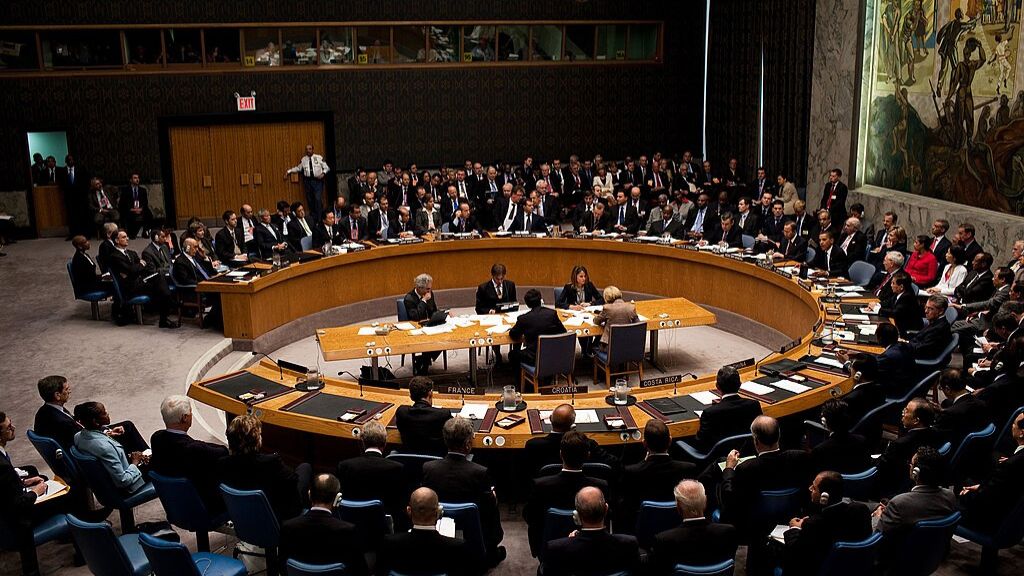
On the request of United States, the UN Security Council hold an emergency session on Iran on January 15, 2026. The United States’ threats of potential military action and weeks of anti-government protests across Iran were the main agendas of the meeting. The Council was informed by U.S. Ambassador to the UN Mike Waltz that President Trump supported “the brave people of Iran” and had stated that “all options are on the table to stop the slaughter.” The meeting began amid worries around the world that tensions in the area would worsen due to Iran’s severe crackdown on demonstrators.
On January 15, 2026, members of the UN Security Council convene in New York to deliberate on the Iranian protests. The protests started in late December amid skyrocketing inflation, rising food prices, and a failing currency, according to diplomats. What began as protests, economic hardship swiftly developed into a national movement, according to U.N. officials. According to the UN, the subsequent crackdown was “deadly,” with thousands of people jailed or injured, and “hundreds” reported dead. The Secretary-General’s office cautioned against applying the death penalty to demonstrators and called for independent inquiries into the violence. Following Antonio Guterres’ remarks, U.N. Deputy Envoy Martha Pobee urged everyone to exercise “maximum restraint” and to refrain from “any actions that could lead to further loss of life or ignite a wider regional escalation.“
Security Council session: Statements and positions
Member states had significantly differing opinions during the private meeting. Ambassador Waltz vehemently denied Tehran’s claims of foreign influence while defending the protesters. He claimed that the Iranian government “is weaker than ever before” and is using “lies to conceal [its] direct involvement in steering unrest in Iran.” Waltz emphasized that the United States supports the Iranian people’s freedom to peaceful dissent and rejected Tehran’s accusations that the uprising was a foreign plot.
Gholamhossein Darzi, Iran’s deputy ambassador to the UN, vehemently denied those accusations. He maintained that Iran did not seek conflict and accused Waltz of spreading “lies, distortion of facts, and a deliberate misinformation campaign.” As a matter of legal principle, Darzi threatened to respond to any assault against Iran with a “decisive, proportionate, and lawful response.” Additionally, Iran’s envoy framed American comments as interventionist and presented the protests as a domestic issue.
Vassily Nebenzia, the Russian ambassador to the UN, charged that Washington had called the meeting to “justify blatant aggression and interference in the internal affairs of a sovereign state.” He cautioned that if things got out of hand, U.S. threats may lead to “even bloodier chaos” in the Middle East. Nebenzia called on Washington and “other capitals” to stop acting provocatively and “come to their senses.”
Human rights and communication were urged by other Security Council speakers. The Iranian demonstrators’ requests for a better living were cited by Denmark’s envoy Christina Markus Lassen, who called on the Tehrani leadership to “finally listen” and calmly address the people’s demands. The international community must condemn the “scale and brutality” of the crackdown, according to France’s UN ambassador, Jérôme Bonnafont. He reaffirmed France’s call for a special meeting of the U.N. Human Rights Council to investigate violations of human rights and for the prompt release of anyone held without cause. Archibald Young, the deputy ambassador for the United Kingdom, denounced Iran’s actions “in the strongest possible terms,” commended “the courage of the Iranian people, particularly Iranian women,” and demanded that Iran “must urgently change course” to preserve fundamental rights. Young noted that “the world is watching” and reiterated G7 threats that further sanctions might be applied if Tehran persists in its behavior.
The tone was cautious but urgent throughout the entire session. U.N. officials stressed that neither Tehran nor Washington should start a larger battle. Later, the Secretary-General’s spokesperson urged diplomacy over force, warning that military strikes on Iran would add “volatility to an already combustible situation.” Delegates emphasized the necessity for ongoing Security Council examination, but no formal resolution was placed to a vote.
Geopolitical and security implications
Wider regional risks were highlighted during the Council discussion. Precautionary measures had previously been spurred by U.S. rhetoric: Some U.S. military personnel in Qatar and Kuwait were warned to seek shelter or evacuate as Iran temporarily closed its airspace. Alongside the UN discussion, the United States signaled increased diplomatic pressure by announcing fresh penalties on Iranian officials connected to the crackdown. Meanwhile, Iran’s leaders have promised to retaliate against any assault. Speaker Mohammad Baqer Qalibaf of the parliament issued a warning, saying that Israel and American forces in the area “will be our legitimate target” if the United States attacked Iran.
Iran reaffirmed that its security forces would not be deterred by foreign threats, while the United States emphasized in briefings to regional partners that all options were being studied. Conflicts outside Iran’s borders could be sparked by an escalation, according to warnings from Russia and other U.N. members. According to analysts, the impasse exacerbates the already unstable Middle East, where tensions have long been elevated by proxy conflicts and sanctions. The Security Council’s involvement kept the conflict polite in the near term, but it also made clear how precarious the situation has become: a mistake might lead to direct or even more extensive confrontations between the United States and Iran.
Outlook
International officials indicated what would happen if the violence persisted, but the emergency summit ended without any tangible action. If Iran disregards the calls,
France and Britain have stated that they are getting ready for potential punitive actions, including as new sanctions and appeals to human rights organizations. Iran should permit independent inquiries into the killings, according to U.N. officials who have reaffirmed their calls for accountability.
The necessity of communication to address complaints has been emphasized by Secretary-General Guterres and envoys from several nations.
The Security Council will continue to monitor Iran’s situation for the time being. Diplomats and intelligence services will be keeping a careful eye on events on the ground in New York and other global capitals. Any additional military actions or crackdowns by either side could spark fresh discussion at the UN. might even prompt regional powers to prepare for emergencies. The Council session’s conclusion was unambiguous: prevent violence and pursue a peaceful solution; if this isn’t possible, the international community is ready to act.