

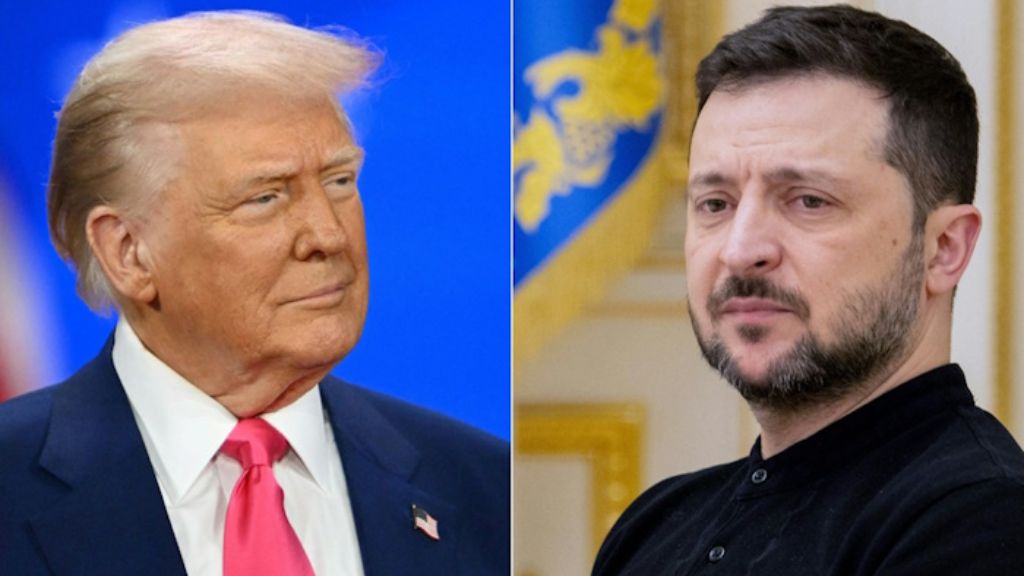
On January 22, Volodymyr Zelenskiy, the president of Ukraine, met with Donald Trump, the president of the United States, at the Davos World Economic Forum. Zelenskiy informed reporters during their discussion that although security guarantees for Ukraine have been finalized, the crucial territorial question is still unresolved. He stated that the first-ever trilateral negotiations between the United States, Russia, and Ukraine will take place in Abu Dhabi on January 23–24. Trump warned that there are ways to go before the war is over, but Zelenskiy and Trump both called the Davos meeting good and a step in the ongoing peace process. “The war has to end,” Trump told reporters.
Unresolved Territorial Demands
Zelenskiy emphasized that “territorial questions must be discussed at the leaders’ level,” with the primary obstacle being land disputes. According to analysts, Russia’s highest demand control over portions of eastern Ukraine remains the ultimate sticking point in negotiations. Specifically, Russia has demanded that Ukraine give over portions of the Donetsk and Luhansk provinces (the Donbas), which Moscow did not completely annex by force. The front lines must remain roughly where they are in any solution, according to Ukraine, which opposes those conditions. The future of occupied areas, such as the Zaporizhzhia nuclear facility, which Ukraine wants to turn into an international zone, is another subject of concern. Overall, “territory is the huge problem here,” as one CNN pundit noted a clear red line for Kyiv.
- Donbas (Donetsk & Luhansk): Ukraine maintains its current positions and insists that any changes be validated by a vote; Russia wants Ukraine to leave areas of the eastern Donbas.
- Zaporizhzhia (Nuclear Plant): Russia’s position is still unclear, while Ukraine suggests a restricted economic zone.
- Other Occupied Lands: Although it hasn’t been discussed in these negotiations, Crimea, which was occupied by Russia in 2014, will be taken into account in any ultimate peace agreement.
The core of the conflict is these geographical conflicts. Zelenskiy had previously cautioned that “the war will continue” in the absence of a land-based settlement. Despite working on a 20-point peace framework with American negotiators, he still has not found common ground on territorial issues. According to CNN sources, the goal of Russian President Putin’s campaign has always been land reclamation; Ukraine has never been willing to give up territory.
Broader Geopolitical Context and Defense Concerns
Zelenskiy’s remarks coincided with Ukraine’s larger appeal for Western assistance. In Davos, he warned that the continent cannot continue to rely solely on U.S. leadership and asked Europe to put aside its differences and function as a unified defense force. In line with Trump’s own criticism of NATO members, he said that European leaders have not done enough to combat aggression. This highlights the geopolitical stakes: Ukraine requires ongoing support from the West if it is to maintain its position in the east.
Zelenskiy pushed Trump for additional air defense capabilities in order to shield civilians and Ukraine’s power infrastructure from Russian missile strikes. “Don’t forget about air defense [and] patriots this is very important for us during this winter,” he said to Trump. These appeals demonstrate how Ukraine is still on a war footing due to unsettled borders. In fact, Zelenskiy has warned that Moscow’s goal is to freeze Ukrainians into submission and has experienced a devastating winter energy shortage as a result of Russian strikes.
Jared Kushner, Trump’s son-in-law, and Steve Witkoff, the U.S. envoy to Ukraine, departed Davos for Moscow to meet with Putin on January 22, 2026. Zelenskiy branded the suggestion to use frozen Russian assets for the rehabilitation of Russian-held territories nonsense and insisted that all monies be used for the reconstruction of Ukraine. The quick move to Abu Dhabi was subsequently confirmed by Witkoff, who stated that “military-to-military talks and discussion of the prosperity package” would occur there. The forthcoming UAE negotiations “appear to be the first time three nations have met together,” according to CNN, indicating a shift in the diplomatic endeavor.
Next Steps: Trilateral Talks and Possible Outcomes
A series of high-level meetings, first in Moscow and then in Abu Dhabi, are the immediate diplomatic result. Zelenskiy expressed his optimism that Europe will soon receive the results from the forthcoming negotiations in Davos. Funding for reconstruction, security guarantees for Ukraine, and most importantly the territorial settlement are all on the table in Abu Dhabi. Zelenskiy will be keeping an eye on whether Russia is, in his words, “ready for compromises.”
There are several possible outcomes: if land claims aren’t satisfied, Russia might increase pressure; on the other hand, if frozen assets can finance what Kyiv and the West find acceptable, it might move closer to a truce. Opponents claim that Trump’s “Board of Peace” proposal for a new international organization could jeopardize the UN. It is evident that none of the parties anticipate an end to hostilities in the absence of an agreement on Ukraine’s borders. Europe cannot return to “Greenland mode,” quietly waiting while aggression persists, as Zelenskiy said.
Overall, Davos produced advancements in Ukraine’s support but no territorial gains. It is evident from Zelenskiy’s public flagging of “unsolved” land concerns that the war, the largest in Europe since World War II, is far from over. The geopolitical and defense ramifications are severe: Western allies must get ready for a lengthy confrontation if a diplomatic settlement is not achieved soon, and Ukraine must continue to defend its current lines in the meantime.