

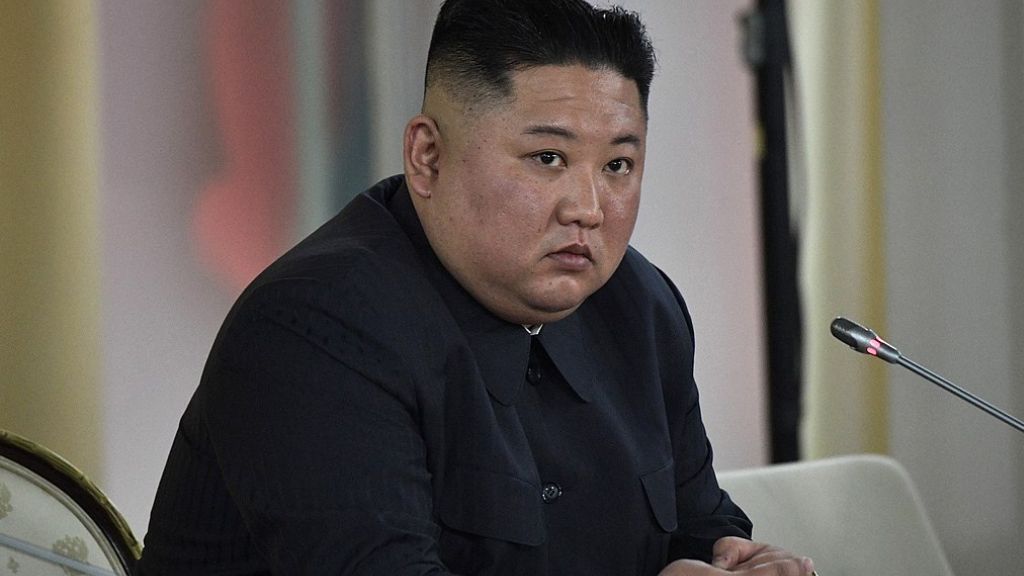
North Korean leader Kim Jong Un has fired a vice premier and publicly blamed top-ranking officials in a show of power on an inspection of a key industrial project, state media reported.
The decision was Covered on January 20 by the Korean Central News Agency (KCNA). The announcement came while Kim was visiting the Ryongsong Machine Complex, which is an important center in the machine-building industry of North Korea. The complex is part of the government’s efforts to modernise its heavy industry and increase domestic production capacity.
The official fired was Vice Premier Yang Sung-ho, who was in charge of overseeing the machine-building industry. KCNA said Kim had removed Yang from his post “on the spot” after it was concluded that he had failed to properly manage and guide the project.
According to the report, Kim criticised Yang for poor supervision, weak organisational leadership and failure to carry out party instructions. Kim said the project had been plagued with delays and confusion owing to what he said was irresponsible behavior by officials in charge. These shortcomings, he further said, had led to economic losses.
Kim’s comments were made before other senior party and government officials attending the inspection. KCNA albeit quoted Kim using unusually direct language to describe the failures. He said Yang was “unfit to be entrusted with important duties” and likened his appointment to the placing of a cart on the back of a goat rather than an ox, a metaphor made to emphasize poor judgment choices in one’s people’s selection.
In addition to firing Yang, Kim came down hard on other officials involved in the project. He criticised what he described as a lack of discipline and accountability in the economic management bodies. Kim said some officials had become passive and defeatist in their attitudes and that hindered progress on key industrial goals.
KCNA said Kim warned senior cadres against repeating such behaviour and called on officials in charge of economic sectors to be more attached to party policy and take better responsibility. He emphasised the need for better guidance, planning and execution of state directed projects.
Yang Sung-ho had served in his position as vice premier in charge of machine-building, a sector deemed significant as support to other sectors of the economy such as construction, mining and defence-related industries. He was also reported to be an alternate member of the Workers Party of Korea’s leadership structure. No replacement was announced at the time the report was made.
North Korea’s political system is dominated by the Workers Party of Korea – a party in which Kim Jong Un has the ultimate power as party leader, head of state and commander of North Korea’s armed forces. The Cabinet, of which the vice premiers are members, is formally responsible for administering economic policy and executing plans of the state, and may, but operates in close supervision by the party.
Kim Jong Un Dismisses Vice Premier and Criticizes Senior Officials
Public criticism or dismissal of senior officials is relatively rare in North Korea, especially if it is reported in state media. When actions like these are made public they are usually justified as having the goal of enforcing discipline and obtaining better compliance with leadership directives.
KCNA didn’t say if the dismissal would cause other personnel changes. The report nevertheless grew concerned with Kim’s directives for strengthening internal discipline and eliminating what he called systemic weaknesses in economic management.
The leadership move is naegleria as the North Korea gets ready for the Ninth Congress of the Workers Party of Korea, a major political event that will, it is being anticipated, establish the policy priorities and organisational direction over the next some years. Party congresses are rare and are used as a way of evaluating performance, setting out economic objectives and adjustments to leadership.
The project, the Ryongsong Machine Complex, was in itself described by state media as an important part of an effort to upgrade industrial facilities and to increase self-reliance. Such projects have political significance as they are associated with much wider economic plans that are voted upon by the party leadership.
Kim’s willingness to acknowledge the project’s faults in public, and to sack a high official in an inspection, reflects the leadership’s focus on accountability within the implementation of state projects.
At a surface level, the dismissal reflects the leadership’s hope that senior officials will deliver results in terms of party directives. The public rebukes are meant to be reminders to other officials of the standards demanded by the central leadership.
The information that is produced and disseminated by the North Korean state apparatus is under tight control, and thus changes in personnel and statements made by officials reported by state media do provide limited but significant insight into how the leadership governs the state apparatus and maintains order among the leadership.
Source : Aljazeera