

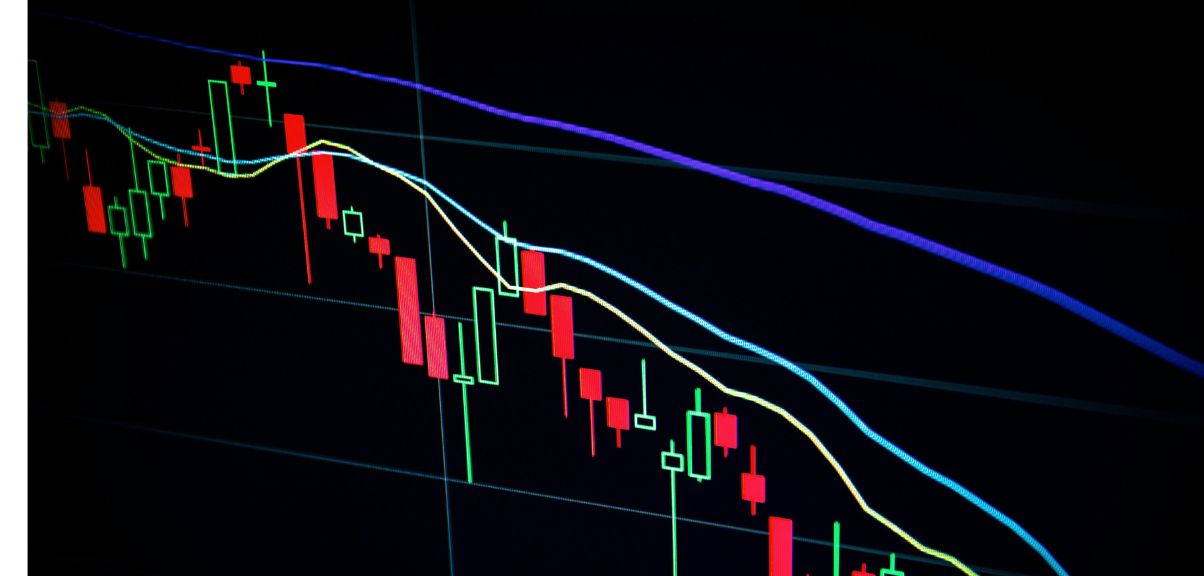
Global stock markets are shaken this week by renewed political tussle between the United States and its European partners over Greenland unsettled investors. The slide came on the heels of new comments by Donald Trump that raised again the issue of Washington’s intention toward the Arctic island, which is a self-governing territory within the Kingdom of Denmark. Markets had been reacting to the increase in geopolitical uncertainty and not to any immediate policy change.
Tensions once again rose after Mr Trump, on a public occasion, reiterated his long-held belief that Greenland was of strategic importance to the United States, both for its geographical position, its natural resources, and for Arctic security. While no official proposed policy came with the remarks, European officials reacted with their familiar position that Greenland is not for sale and its status is for Denmark and Greenland’s local government to decide.
The exchange woke up memories of previous diplomatic friction on the problem, and took fresh attention off the Arctic geopolitics. Greenland has a key location between North America and Europe, and contains significant military infrastructure related to the defense of the Arctic with Northern European countries as part of the “NATO.” The opening up of new arctic shipping routes and access to resources as a result of climate change are all the reasons competition and strategic signaling in the region have increasingly become.
For investors, the immediate issue was not an action, but a return of an unresolved political dispute between close US allies. Market participants saw the comments as adding to the diplomatic chatter at a time when politics is already adding so much noise to world markets.
With increased uncertainty in the financial markets, financial institutions are generally willing to sell off those risk assets. In this case, investors took a second look at Geopolitical stability on transatlantic relations and the Arctic region. The worry was that renewed tension would make it difficult to cooperate on security, trade and energy policy between the US and Europe.
Equity markets in Europe dropped slightly with the broad-based indices showing losses as risk sentiment faded. US stock futures also fell lower, showing the ocean rather than panic. Analysts called the reaction a “risk-off” move experienced because of headlines rather than fundamentals.
Currency markets demonstrated little, but visible changes. The US dollar had strengthened marginally against some major currencies as investors shifted to what could be considered safe assets. Meanwhile, Nordic currencies were under mild pressure with the regional focus of the dispute.
Defense-related stocks came to focus attention as investors activated the ‘hard to predict’, yet possible ‘Largemmans Move’ of some increased military expenditure or strategic posturing in the Arctic. Shares of some defence contractors increased on expectations that geopolitical tension can provide support for demand for security-related goods and services.
Even shipping and logistics stocks came under the microscope. The Arctic is becoming more talked about as a shipping lane of the future and any instability in the Arctic circle will impact long-term investment planning. While there was no immediate effect on flows of trade, uncertainty had a bearing on sentiment within the sector.
Commodity markets worked both ways. Prices of industrial metals did not show too much of a direct reaction but energy markets were on the lookout for the larger geopolitical signals. Greenland is said to contain abundant potential for mineral and energy development, and new focus in the island has increased cognizance of strategic resource security importance.
The episode shreds into a larger pattern of increased attention to the Arctic of the major powers. The United States, European countries, Russia, and China all have all increased their focus on the region because of security reasons and economic opportunity. For Europe it continues to be a priority to maintain stability and cooperation inside the N.A.T.E., especially when the latter adjusts to new strategic challenges.
For the US, Arctic engagement is part of a larger global strategy, which covers competition with other major powers. However, public disputes with allies can lead to short-term fluctuations in the market even if there are no changes to long-term policy.
Market participants stressed the sell-off was a function of caution and not a reappraisal of the fundamentals of the economy. There were no signs of capital flight, and no systemic stress. Instead, investors seemed to price on the expectation of an elevated measure of political uncertainty, and waited until they saw clearer signals from policymakers.
Economists and strategists have pointed out that it is presently market sensitive to geopolitical headlines, especially those involving major powers and strategic regions. In this environment developments that are of a rhetorical character can impact the sentiment.
In summation, the sinking in stock markets emphasized the way in which geopolitical signaling can have an effect on global finance. While the new focus on Greenland did not change economic policy, it created an additional degree of uncertainty for investors in an already complicated global landscape.