

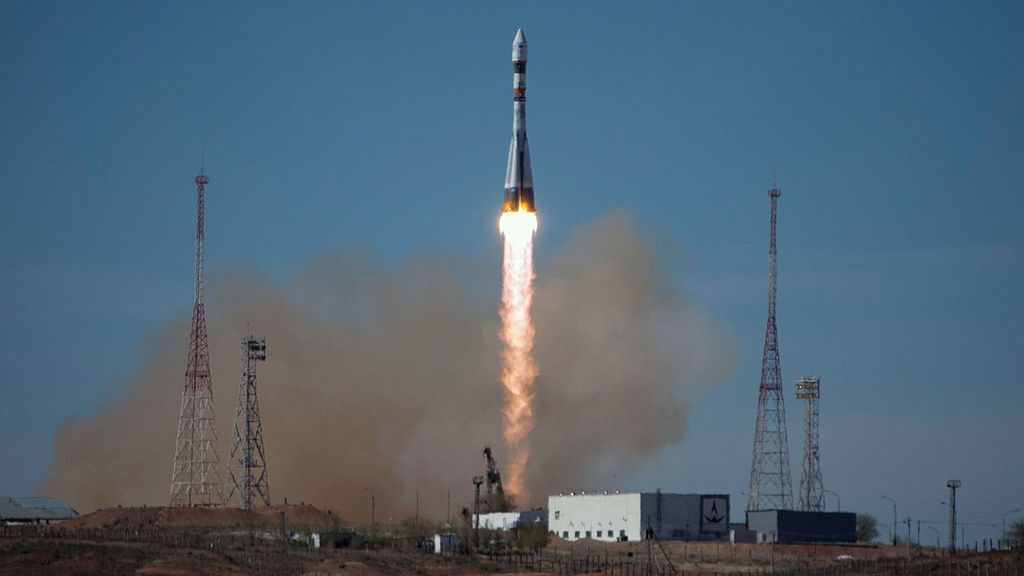
The Russian Defense Ministry published video on December 30, 2025, showing a mobile launch unit of its new Oreshnik hypersonic missile weapon being put into service in Belarus. In a forested area of Belarus, a close ally of Russia that borders Poland, Lithuania, Latvia, and Ukraine, troops are seen disguising the transporter-launcher in the footage, which has been verified by official media. In reaction to “Western aggression,” Belarusian President Alexander Lukashenko has previously declared that up to ten of these systems would be delivered. According to Minsk’s defense ministry, the Oreshnik division is now engaged in warfare in specific regions of Belarus.
Missile Capabilities and Deterrence
The Oreshnik, whichh means “hazelnut tree” in Russian, is a road-mobile, intermediate-range ballistic missile that is based on the RS-26 Rubezh design. It is said to move at more than Mach 10 and can be equipped with conventional or nuclear bombs. Vladimir Putin, the president, has praised the weapon’s speed and asserted that it is “impossible” to intercept. With a range of roughly 5,000–5,500 km, it can go from Belarus to any location in Europe (and even some areas of the western United States). Although those numbers are based on unconfirmed official statements, Russian state-run media promised that an Oreshnik could reach an air base in Poland in approximately 11 minutes and NATO headquarters in Brussels in around 17 minutes.
• Speed and reach: Hypersonic speed would improve air defense and missile warning systems by cutting down on target warning times.
• Nuclear-capable: It is claimed that even an Oreshnik equipped with conventional weapons has destructiveness “comparable” to a nuclear attack. The system belongs to the category of intermediate-range missiles (500–5,500 km), which the United States and Russia agreed to outlaw under the INF Treaty (which was abandoned in 2019).
• Deterrence message: According to Western commentators, Russia’s public deployment indicates that it will continue to use nuclear deterrence as a political instrument. Put differently, the purpose of placing these weapons close to Europe is to increase the expense of direct intervention in order to discourage Western assistance for Ukraine.
However, some military analysts and NATO officials are still dubious about Oreshnik’s revolutionary impact on the battlefield. In late 2024, a U.S. official told Reuters that it was “not seen as a game-changer” [16]. In fact, experts contend that rather than being a direct threat, the deployment is more a reflection of Moscow’s geopolitical posturing. Deeper concealment and training grounds for the system are provided by the Belarus site, which researchers have identified as the former Krichev-6 airbase.
Regional Security Implications
Concerns about regional security are unavoidably raised when nuclear-capable missiles are placed on NATO’s doorstep. In the worst event, European capitals need to prepare for even shorter warning timeframes due to Belarus’s borders with Poland and the Baltic nations. NATO has not yet released a statement regarding this particular deployment. However, European leaders have long cautioned that caution is necessary due to Russia’s aggressive military actions. Friedrich Merz, the chancellor of Germany, expressed concern about any weakness in Western resolve when he recently called on Europe to “defend and assert our interests much more strongly by ourselves.”
Analysts emphasize the context: there is a lot of diplomatic action and disagreement between Russia and Ukraine at the time of this deployment. The U.S led peace negotiations and Moscow’s allegations of a Ukrainian drone attack for which Kyiv denied responsibility occurred at the same time as the Russian statement. Moscow’s action in this tense situation strengthens its deterrent posture while also demonstrating strength to Western viewers. Despite Belarus’s claims of aggression, Russia’s strike area is practically extended westward by the partnership between Minsk and Moscow. NATO nations will probably react at the same time by bolstering missile defenses, holding readiness exercises, or reassessing deployment plans standard procedures for preserving deterrence in the face of escalating threats.
In conclusion, the deployment of Oreshnik indicates a rise in defense tensions between Russia and Europe. It highlights the unstable context of the conflict in Ukraine but does not, at least not yet, alter NATO’s collective defense strategy or the basic balance of power. While the weapon’s dramatic claims are worth examining, observers warn that the political message of nuclear-capable hypersonics at Europe’s frontiers is evident: Moscow is highlighting its capacity to attack NATO territory as part of its larger security posture.