

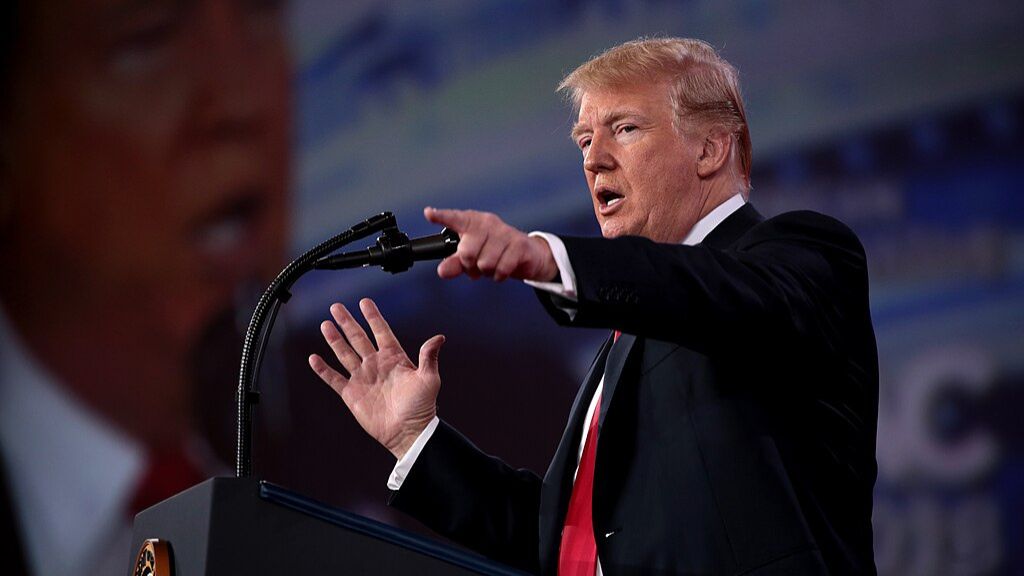
Following a U.S. raid in Venezuela, President Trump made the comments on January 4-5, 2026, during spontaneous meetings with media. A U.S. operation in Colombia “sounds good to me,” he stated, harshly criticizing Colombian President Gustavo Petro and describing the country as “very sick country run by a sick man, who likes making cocaine and selling it to the United States”. He also mentioned Cuba, saying that because Venezuelan oil subsidies have stopped, it “looks like it’s ready to fall”. These remarks were made right after U.S. forces apprehended President Maduro of Venezuela; while they have raised concerns, they are more bluster than official policy orders.
Colombia-U.S. Relations Under Petro
The Colombian government swiftly denounced Trump’s remarks, calling them a “unacceptable threat” and “undue interference in the internal affairs of the country”. President Petro, who was already outspoken in denouncing the U.S. strike on Venezuela, denounced the insult and cautioned Latin American countries to come together instead of “looking only to the north” (noting that “the US is the first country in the world to bomb a South American capital)” when referring to Caracas. Colombia has historically been an important U.S. security ally, but relations have cooled since Petro took office. With claims to have destroyed over 18,000 cocaine labs, Petro’s government has concentrated on combating criminal networks. Trump’s comments, which are rooted in long-standing American grievances with Colombian cocaine exports, might worsen relations. Such threats can lead Bogotá to look for other security allies or reduce collaboration on anti-drug initiatives if they are taken seriously. However, U.S. officials have not yet declared any real military operations in Colombia, indicating that this is more political posturing than a change in formal policy.
Cuba’s Internal Struggles and External Narrative
The authorities of Cuba also responded defensively. President Miguel Díaz-Canel denounced the U.S. strike on Venezuela as “state terrorism” and a “shocking violation of the norms of international law” during a sizable public demonstration in Havana. Trump’s interview declaration that “Cuba is going to fall of its own volition” repeated his assertion that Cuba is “ready to fall,” which he linked to Cuba’s loss of Venezuelan oil revenue. It is experiencing a severe economic crisis; according to Reuters, the country has experienced a six-year decline in GDP of at least 15%, persistent shortages, skyrocketing inflation, and regular blackouts. Cuban officials interpret Trump’s remarks as proof of external hostility and attribute this to decades of U.S. embargoes and sanctions. In actuality, despite difficulties, Cuba’s one-party system has managed to hold. Although U.S. policies under Trump’s first term strengthened sanctions on Havana (and a large portion of Cuba’s hard cash comes from Venezuelan oil), analysts point out that there is no sign that the present U.S. government has specific plans to invade or overturn Cuba. However, Trump’s remarks support Cuba’s external-security narrative, which can be used internally to mobilize the populace in support of the government and defend crackdowns by depicting any opposition as being influenced by the United States.
Regional Reactions and Geopolitical Stakes
The governments of Latin America have been fiercely split. The U.S. operation and Trump’s rhetoric have been denounced by numerous left-leaning leaders. Petro of Colombia, Luiz Inácio Lula da Silva of Brazil, and others condemned Trump’s threats and the Venezuela raid as acts of aggression that violated sovereignty. To denounce “aggression against the sovereignty of Venezuela and Latin America,” Petro even convened an urgent meeting of the UN Security Council. Although she acknowledged continued security collaboration with Washington, Mexican President Claudia Sheinbaum also denounced the U.S. intervention. On the other hand, a number of conservative governments have applauded Maduro’s removal. Argentina’s libertarian leader Javier Milei hailed Maduro’s removal as justice for narco-criminals, while Chile’s incoming conservative president José Antonio Kast called on Latin America to destroy the Maduro regime’s “apparatus” and Javier Milei, the libertarian leader of Argentina, hailed Maduro’s removal as punishment for drug dealers. This division reflects regional ideological divides. Experts caution that such divisive U.S. actions run the risk of escalating instability: right-leaning states may covertly embrace U.S. pressure on leftist regimes, while leftist blocs (like ALBA) may unite in defense against perceived U.S. imperialism. In any event, Trump’s statements, which specifically allude to domination in the Western Hemisphere, are reminiscent of the Monroe Doctrine. Other countries can get alarmed by that and be motivated to fortify regional ties or seek counterbalance from external powers like China or Russia.
Analysis: Diplomatic and Security Implications
Trump’s comments seem to be more motivated by political propaganda than by practical directives. They nevertheless pose a serious diplomatic risk. If Colombia feels threatened, it might be less inclined to assist U.S. intelligence or counter-narcotics initiatives. Bogotá has cautioned that assaulting an ally would be tantamount to “declaring war,” and any deterioration of mutual trust may force it to form new alliances (it may reestablish connections with regional and European organizations to safeguard its interests). The remarks support the Cuban government’s narrative of American animosity, which might provide Díaz-Canel with justification to further securitize society or suppress protests. Without official policy changes, outright confrontation appears unlikely in both situations, but the ambiguity itself may cause planning to become unstable. Strategically, this language would encourage U.S. foes to strengthen their connections with Cuba, Venezuela, or Colombia as a hedge; for instance, Cuba and Venezuela already depend on assistance from China, Russia, and Iran, who could take advantage of U.S. measures to increase their influence.
Overall, experts stress that these remarks are now Trump’s own claims to the media, not new agreements or directives from Congress. They should be interpreted as hostile messaging in the absence of specific military directives. Future events will require more coverage if they occur, such as a discussion in Congress about war powers or worldwide censure. For the time being, diplomacy will be the main focus in Washington and Latin American capitals, regardless of whether U.S. officials want to reassure neighbors or strengthen their stance. The situation is still changing, and any significant changes in policy or regional reactions could be examined in a subsequent report.