

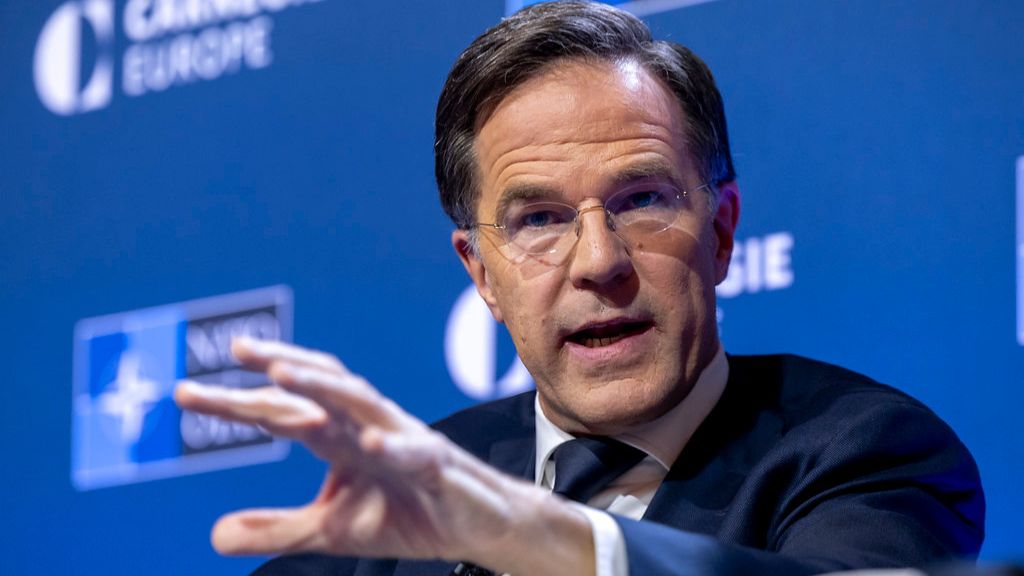
NATO Secretary-General Mark Rutte explained in late January 2026 that President Trump was not informed of Greenland’s position during their Davos summit. The main topic of discussion, according to Rutte, was “what we need to do to make sure that the Chinese and the Russians are more and more active how we can protectit.” Additionally, U.S. officials downplayed the need of discussing sovereignty. In Davos, Trump made it clear that he would not use force to take Greenland and switched from tariffs to diplomacy. In order to satisfy U.S. missile-defense interests the Golden Dome system and provide access to vital minerals while purportedly preventing Chinese or Russian actions in the area, he announced a “framework of a future deal” on Arctic defense. Leaders from Greenland and Denmark applauded the de-escalation and called for Greenland to stay a part of the Kingdom of Denmark with full respect for Danish sovereignty and Greenlandic self-determination.
Greenland’s Strategic Significance
Greenland is a large Arctic island home to about 56,000 inhabitants, but its geopolitical significance has long outweighed its number. It straddles developing polar shipping lanes and has unexplored quantities of rare minerals and hydrocarbons on its ice-covered plains approximately 80% ice sheet. Crucially, Greenland is home to the northernmost U.S. military facility, the Pituffik (Thule) space base, which performs space surveillance and missile warning. The United States is permitted to post hundreds of troops in Denmark under the terms of the 1951 defense pact; in fact, Washington presently keeps between 130 and 200 personnel on Greenland. Analysts point out that Greenland is essential to NATO’s northern defenses and Arctic early-warning systems because of its position between Europe and North America. Trump’s administration has therefore justified their actions by citing national security and the necessity to dissuade China or Russia.
Greenland is independent in its internal affairs under the Kingdom of Denmark, although it depends on Denmark for defense and foreign policy. Despite its continued reliance on Danish subsidies, it even has the legal power to proclaim complete independence a 2009 Home Rule agreement. Leaders from Greenland and Denmark have emphasized time and time again that Greenland is “not for sale” and does not want to join the United States. Greenlandic lawmakers in the Danish parliament maintain that Greenland must fully participate in any talks concerning Greenland’s future.
NATO’s Arctic Strategy and Messaging
Instead of focusing on a territorial confrontation, NATO leaders have attempted to limit the Greenland dispute inside a larger Arctic security framework. Eight NATO members Denmark, France, Germany, the Netherlands, Norway, Finland, Sweden, and the United Kingdom announced preparations for combined Arctic exercises just days after the situation peaked. They publicly emphasized that NATO’s alliance patrols in the Arctic are a shared security measure and do not pose a threat to anyone when they sent small reconnaissance contingents to Greenland. In order to demonstrate solidarity, Denmark’s Operation Arctic Endurance plan to rotate multilateral air, sea, and ground forces on Greenland. The objective is a “more permanent military presence” on Greenland in tight alliance collaboration, according to Denmark’s Defense Minister Troels Lund Poulsen. These actions emphasized collective defense rather than U.S. unilateralism and were clearly presented as a reaction to Chinese and Russian Arctic engagement.
NATO has emphasized joint action in its diplomatic messaging. Greenland is covered by Article 5, just like all allied territory, according to Rutte and other authorities. The United States would participate in a NATO response to any foreign incursion on Greenland. In addition to praising Trump’s focus on Arctic security, Rutte emphasized that “the U.S. will continue its conversations with Greenland and Denmark” in order to keep enemies out. Expanded patrols and surveillance could be part of the solution to U.S. security worries, according to former NATO planning director Fabrice Pothier. However, he cautioned that NATO’s reputation has already been damaged by questions about American commitment: “A doubt about U.S. commitment to NATO has been introduced with [Trump’s] claims that will be seldom forgotten.”
Denmark’s Role within NATO
Denmark, a founding member of NATO and the sovereign of Greenland, has assumed the diplomatic initiative. Trump’s advances were categorically rebuffed by Prime Minister Mette Frederiksen, who urged Washington to stop threatening an ally and said, “It makes absolutely no sense” to consider U.S. annexation. Denmark’s red lines were emphasized by Foreign Minister Lars Løkke Rasmussen, who stated that any discussion must “respect the integrity and sovereignty of the Kingdom [of Denmark] and the right of the Greenlandic people to self-determination.” Denmark has secretly strengthened its Arctic defense, pledging an additional €4–5 billion last year to support Northern facilities and patrols. In its 2025 defense review, it established a Joint Arctic Command with approximately 150 troops and pledged new resources for Greenland’s defense, including tankers, F-35 planes, long-range drones, and P-8 maritime patrol aircraft. Noting Denmark’s growing capacity for monitoring in the High North, NATO Secretary Rutte commended these investments. With Danish forces bolstering NATO’s Arctic coverage, Denmark is effectively establishing Greenland as fully integrated into the alliance’s defense infrastructure.
Prime Minister Jens-Frederik Nielsen’s cabinet in Greenland mirrored Denmark’s position. Europeans need to understand that “Greenland is not for sale does not want to be owned by or governed from the United States,” according to Nielsen. Concerning sovereignty, Greenlandic voices also demand that Greenland’s representatives be included in alliance discussions, saying, “nothing about us, without us.” However, Greenlandic officials have largely backed further negotiations: Nielsen praised U.S. communication and stated that, if Danish sovereignty is respected, a U.S.-Greenland security relationship might be explored.
Implications for Transatlantic Relations
NATO’s internal unity and faith in the United States have been highlighted by the Greenland incident. NATO’s strength has historically come from consensus and mutual defense, but President Trump’s demands about a member’s territory went against these standards. A U.S. claim to Greenland, according to experts, would be unprecedented and might result in “the end of the alliance,” making Europe much more vulnerable to dangers like Russian aggression. European politicians openly supported Denmark: Support for Danish sovereignty has been reaffirmed by French President Macron, as well as German and Nordic leaders, who have framed the issue as NATO unity. Greenland is “not for sale,” according to the UK government, which also supported a diplomatic solution.
NATO has attempted to use the situation as a chance to bolster Arctic defense at the same time. Arctic security is a shared goal, allies reaffirmed in Brussels and Davos. In a joint statement released on January 18, eight NATO nations reaffirmed their commitment to “strengthening Arctic security as a shared transatlantic interest” and clarified that the Dane-led exercises presented “no threat to anyone.” Without granting any nation unique claims, Secretary Rutte stated in Brussels that NATO will develop a common High North policy, strengthening relationships in the face of Chinese and Russian action.
Lastly, the event brought transatlantic trust’s vulnerability to light. The Greenland dispute is seen by many NATO members as a concerning distraction from their long-urged focus on European security, particularly in the wake of the conflict in Ukraine. According to Reuters, allies concentrating on the eastern flank found the conflict to be “an unwelcome and dangerous distraction”. Denmark has urged private diplomacy to handle Arctic security without using public threats, because Trump has now pledged to engage in conversations. However, some diplomats warn that the effects of this incident will persist long after Trump’s retreat from tariffs and force: “With [Trump’s] claims, he has introduced a doubt about U.S. commitment to NATO that will be seldom forgotten,” one expert said. As a test of NATO’s cohesion and transatlantic ties in general, how the alliance handles Arctic deterrence while rebuilding trust within the alliance will be closely monitored.