

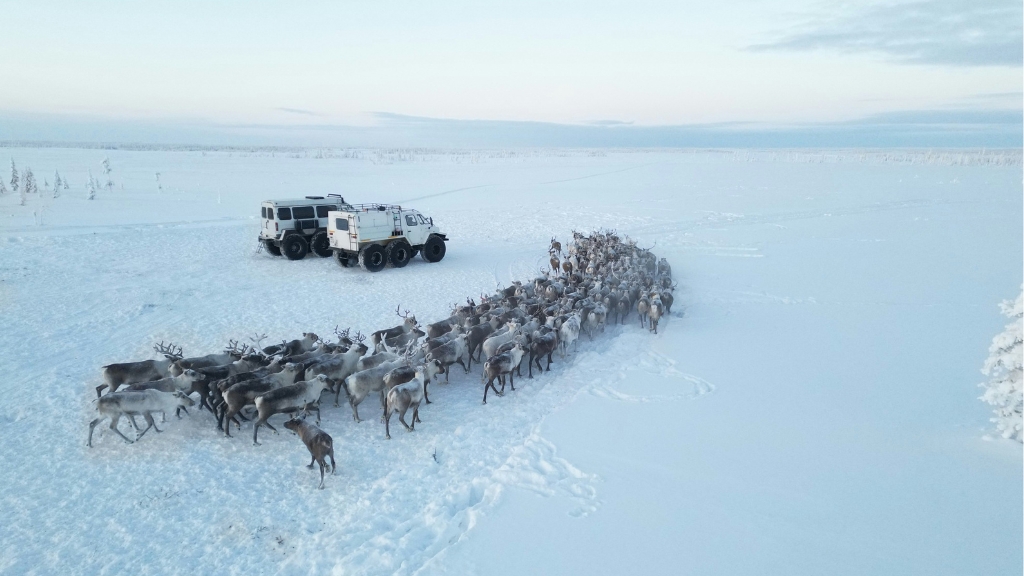
In response to Trump’s insistence that Greenland should be a part of the United States, Copenhagen recently dispatched more troops to the region. General Peter Boysen, the chief of the Danish Army, led a “substantial” advance contingent to Kangerlussuaq on January 19. According to public accounts, approximately 58 more soldiers arrived on January 19, joining the approximately 60 who had previously been sent to participate in Operation Arctic Endurance, an expedited Arctic exercise brought on by recent strategic tensions. Prior to this augmentation, Denmark had approximately 150 personnel posted to its Joint Arctic Command in Greenland. As part of multilateral exercises, these Danish soldiers are establishing temporary outposts, logistics, and surveillance patrols throughout the island. The stated objective is to strengthen Greenland’s defense and prevent any threats to its sovereignty; Denmark claims that these actions are necessary in light of the increasingly unpredictable security situation.
Denmark Expands Military Presence in Greenland
Situated in the strategic center of the Arctic, Greenland is a self-governing Danish colony. Its location controls access between Europe, North America, and the arctic region, and its massive ice cover is melting, revealing rich mineral reserves and creating new polar sea routes. In keeping with Greenland’s role in continental security, the United States already maintains a significant base and early-warning radar at Pituffik (Thule) Air Base under a 1951 military pact. According to one expert, “security in the Arctic is not only for the Kingdom of Denmark, it is for all of NATO.” In this regard, Denmark and NATO consider a robust Arctic presence to be essential.
Denmark’s approach has received widespread support from EU partners and NATO allies. Small detachments from other European nations started coming to Greenland in mid-January to take part in planning and drills. For instance, Germany sent a 13-person reconnaissance team to Nuuk, while France sent perhaps 15 mountain-infantry soldiers. Approximately two officers each from Sweden, Norway, Finland, and the Netherlands participated in the planning process. The UK, Belgium, Slovenia, and Iceland announced even smaller “tripwire” missions, each involving one or two policemen. Senior Danish officials and NATO Secretary General Jens Stoltenberg talked about ideas for a coordinated Arctic expedition to strengthen Greenland’s security. EU leaders openly declared that Denmark’s and Greenland’s sovereignty is “non-negotiable” at Brussels and Davos. In order to assist safeguard the area, the EU is putting together an Arctic security package that includes investments in Greenland’s infrastructure and Arctic icebreaker capability, according to Commission President Ursula von der Leyen. Following backing from Nordic and Atlantic partners, Denmark’s defense minister expressed gratitude to “our allies for standing up for Greenland and Denmark,” reflecting this solidarity.
Greenland’s Sovereignty and Public Response
The officials and citizens of Greenland have made it clear that their island is not for sale. Visiting U.S. officials were informed by Prime Minister Jens-Frederik Nielsen that “we choose Denmark if any choice is forced.” NATO is our choice. The Kingdom of Denmark is our choice. About 85% of Greenlanders were against any U.S. annexation, according to a Danish survey conducted in late 2025. In a show of support, people marched around Denmark behind Greenland’s flag and EU banners. Official declarations that any alteration to Greenland’s status would be against international law and NATO’s Article 5 reflected these views. In summary, the generally held belief that Greenland’s defense needs to be credible and coordinated is reflected in Copenhagen’s decision to send additional troops. To maintain the island’s security under Danish sovereignty, all parties place a strong emphasis on communication and collaboration, including suggestions for a NATO Arctic mission.