

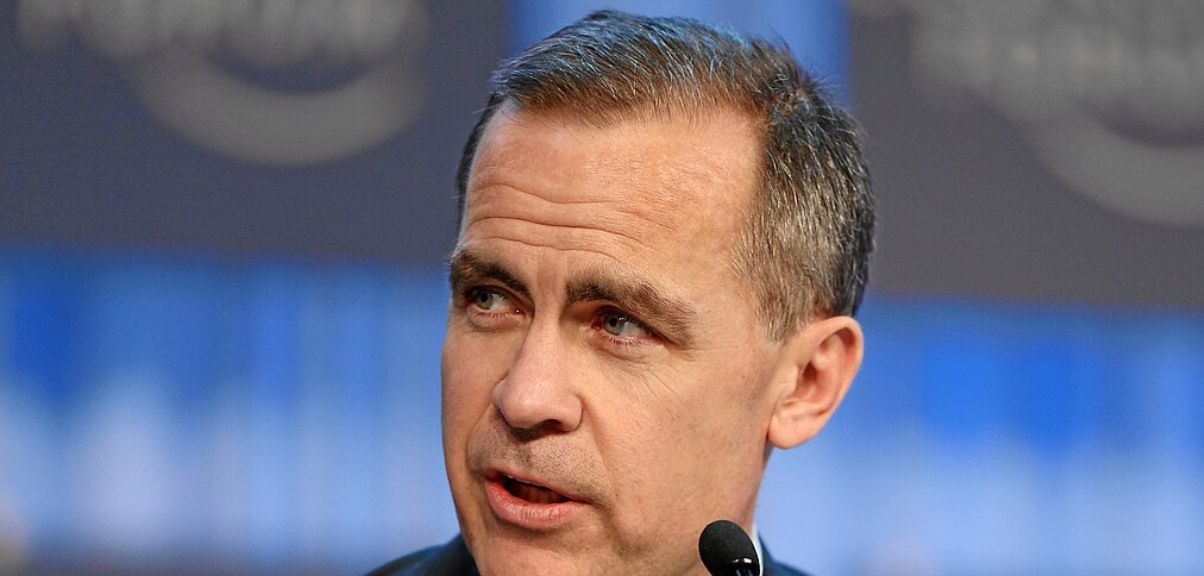
DAVOS, Switzerland – Canada’s Prime Minister Mark Carney gave a bleak diagnosis of the state of world geopolitics on Jan. 20 at the World Economic Forum (WEF) annual meeting in Davos, predicting that the international order favoured by the United States for decades is not just shifting but in fact fracturing. Carney said the rules-based system that supported global economic and political cooperation since the end of World War II is facing a “rupture, not a transition.”
Carney’s comments – delivered to political and financial leaders a day before U.S. President Donald Trump’s planned address to the forum – avoided explicitly calling out Washington by name but made an unmistakable reference to actions by the United States and other great powers that are undermining traditional rules of cooperation and constraint, Carney said.
At the heart of his warning is a belief that the institutions and alliances that used to be held together by US leadership are unraveling. Carney argued that multilateral institutions like the World Trade Organization (WTO) and old-school diplomatic norms are coming under assault by the growing use of economic instruments as tools of coercion – including tariffs, supply chain dependencies and financial pressure. Whereas in the past trade and integration were considered to be mutually beneficial, he said, there was vulnerability to leverage from the most powerful.
Carney recognized that the rules-based order of the postwar era was never perfect – powerful states had often manipulated rules to their advantage – yet it did incorporate tangible public goods such as open sea lanes, storehouses of arguments for settling disputes and architecture of a stable financial system, he said. That bargain no longer works, he argued, as it used to.
Why US Leadership is Now Being Questioned
Carney’s speech comes in a time of increasing geopolitical competition and crumbling alliances. Economic and strategic competition amongst the major powers, such as the United States, China and the European Union, has strained the way to reach consensus that was behind decades of cooperation. In Davos itself, tensions over a controversial proposal by the US to purchase Greenland helped to highlight wider strains between Washington and its European partners.
Traditional U.S. leadership in world institutions and security alliances are being questioned in the face of domestic political debates in Washington, domestic economic pressures and changing priorities among allies. This has coincided with a general shift towards a multipolar world globally where the rising middle powers and regional blocs are asserting their own interests. Carney’s comments indicate these changing dynamics and point to the fact that leaning on past structures for stability may not hold up.
Implications to Global Markets and Trade Systems
Carney’s concerns have obvious economic implications. If the informal assurances of US leadership weaken, there could be more volatility and fragmentation in global markets. Multinational trade arrangements such as regional trade arrangements may become more significant as trust in more general rules fails. Supply chains may increasingly become localized regionally or create bifurcations to the extent states prioritize strategic autonomy over integration.
The potential for trade and financial instruments to become a geopolitical leverage tool – a central theme of Carney’s remarks – could mean higher costs to manage the risks and more uncertainty for investors, exporters and importers. These dangers highlight underlying cracks in the world economic order that many firms and governments had hoped would have been cleared up after previous crises.
Middle Powers in a Shattering System
For the middle powers such as Canada, adaptation is the key, Carney has argued. He urged countries who share values – including respect for human rights and territorial sovereignty – to work more closely together as the assumptions of the old system become anachronistic. “It’s a matter of if we’re not at the table, we’re on the menu,” he said as a summary of his belief that smaller countries need to make alliances in order to safeguard their interests and affect the outcome.
In Canada, the path to this seems to involve strengthening relationships beyond traditional partners. Some of Carney’s comments and subsequent related reporting indicate enhanced relations with countries like China as part of a broader approach to diversifying diplomatic and economic relations.
Reactions of Washington and Allies
So far, there are few direct responses from Washington or key US allies to Carney’s remarks. The speech was made right before President Trump would come to Davos, making swift official refutations or endorsements difficult. European leaders at the forum have repeated the concerns about the demise of norms, formulating their statements around the need to maintain international law and cooperation.
While no formal response from the U.S. government has been published at the time of writing, Carney’s comments have already added to a broader discourse on the future of global leadership, as well as increased scrutiny on the usage of major powers to employ their economic and diplomatic tools.
For full context on Carney’s remarks and reactions from global leaders, see Reuters’ reporting on
Macron tells Davos of a ‘shift towards a world without rules’
January 20, 2026 — At the World Economic Forum in Davos on January 20, 2026, French President Emmanuel Macron expressed concern over a global shift away from established rules and international law. He warned that the world is increasingly moving toward a state where international norms are disregarded and power dynamics dominate. Macron highlighted the return of “imperial ambitions,” suggesting a resurgence of aggressive, unilateral actions by powerful nations, which threaten the multilateral order and stability established after World War II. His remarks underscored the growing geopolitical instability and erosion of international cooperation.
For full context on Carney’s remarks and reactions from global leaders, see Reuters’ reporting on