

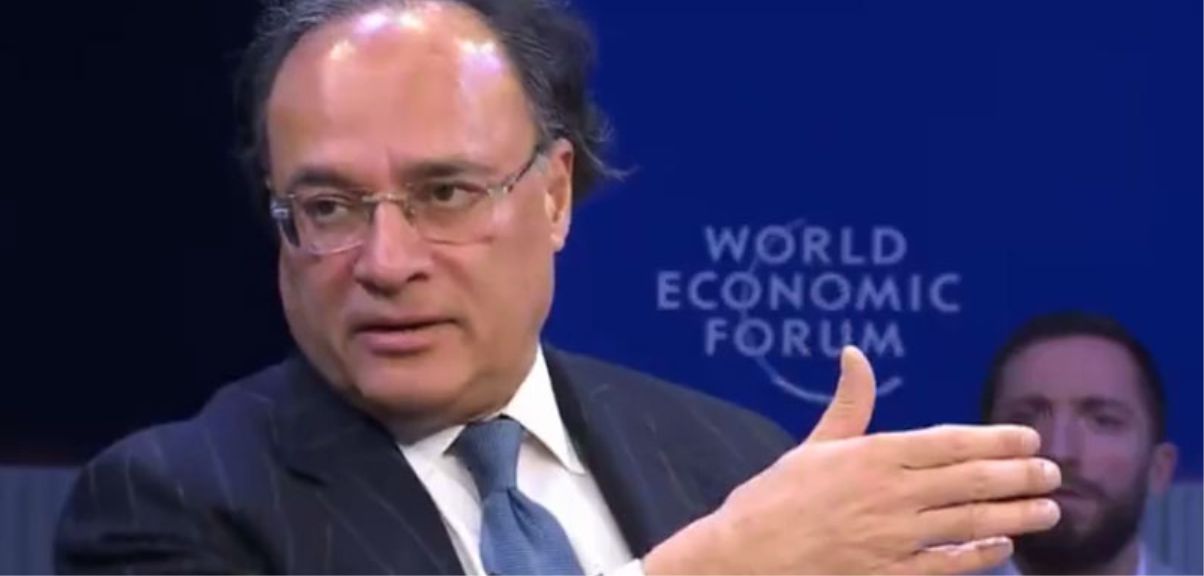
For Pakistan, climate change is no longer something that sits in reports or projections for the future. Instead, it is already affecting economic growth, shaping government priorities, and putting pressure on limited public resources, Finance Minister Muhammad Aurangzeb said during discussions this week.
Debt, Exports, and Long-Term Economic Stability
Speaking at the World Economic Forum in Davos, Switzerland, Aurangzeb stated that the country is facing climate-related shocks with increasing frequenccy. Recovery is becoming more difficult with each passing episode, although for Pakistan these extreme weather events are not new, but their growing intensity and impact has adverse impact on the overall economy.
The finance minister has stated that,climate change is being felt across different sectors in Pakistan. Agriculture suffers first, but infrastructure damage and immense stress on energy systems is also an issue of the moment. Because of this, economic activity is often disrupted, and growth slows in ways that are not immediately visible but become clearer over time.
Government spending is repeatedly redirected toward emergency relief and reconstruction, Aurangzeb clarified, and while such spending is unavoidable, it also cause the delay for resources which are meant for development projects.Climate change, not only shapes environmental outcomes but has also begun to quietly shape fiscal decisions.
Although Pakistan’s contribution to global greenhouse gas emissions remains small it is still seen a one of the most climate-vulnerable countries, That imbalance has become harder to ignore in recent years, particularly after the floods of 2022. Those floods affected millions of people, damaged crops and homes, and caused extensive harm to transport and communication networks. More importantly, they showed how quickly years of economic progress can be undone.
The government is preparing to launch Pakistan’s first Panda Bond. The bond will be issued in China’s domestic market by the end of this month and will take the form of a green bond. While part of the goal is to diversify Pakistan’s sources of financing, the finance minister said the proceeds are also expected to support projects related to environmental sustainability and climate resilience.
Speaking at a separate high-level panel held on the sidelines of the forum, Aurangzeb turned to the issue of global debt.He stated that For countries like Pakistan, fiscal discipline matters now more than ever. He argued that debt should be directed toward investments that create exportable surplus rather than short-term consumption nd should be used carefully.When borrowing is tied to productive activity, he said, it strengthens repayment capacity and supports longer-term stability. In that context, export-led growth remains one of the more viable paths for developing economies facing tighter financial conditions and growing climate risks.
Source: Radio Pakistan