
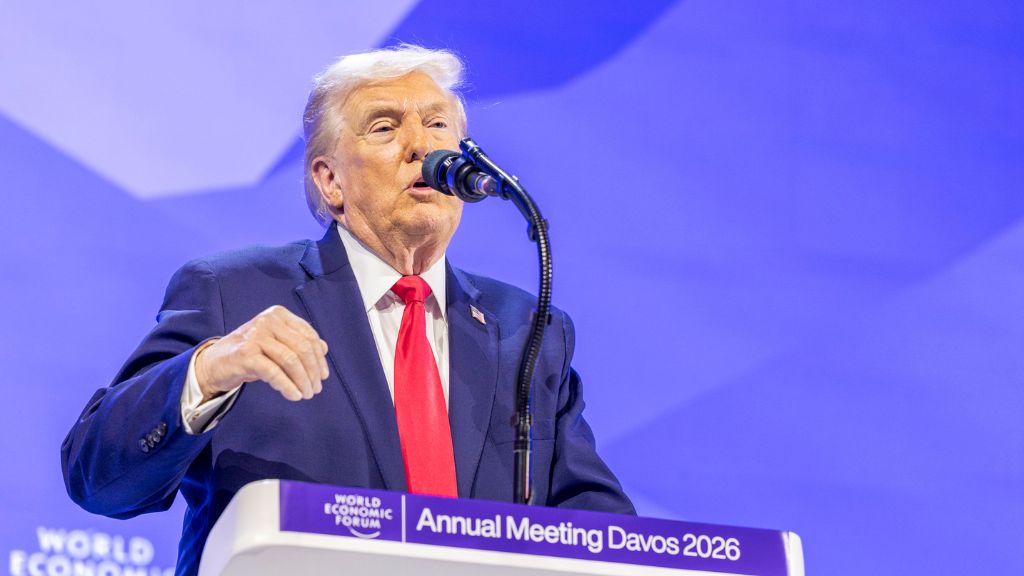
At the World Economic Forum in Davos on Thursday, President Donald Trump formally established a new international Board of Peace, stating that it will supervise the Gaza ceasefire and deal with more general international problems. Trump, who would serve as the board’s chair, encouraged dozens of foreign leaders to participate and emphasized that it would complement the UN rather than take its place. He stated during a signing ceremony that “once this board is completely formed, we can do pretty much whatever we want to do,” adding that it would be “in conjunction with the United Nations” and that the UN had tremendous potential that had yet to be realized. He praised the board as having the potential to be one of the most consequential bodies ever created, pointing out that many of its members are powerful despite being controversial individuals. Draft documents suggest that unless member states pay $1 billion for permanent status, they serve three-year periods.
Over 20 Countries Sign Charter to Oversee Gaza Ceasefire
On Thursday, representatives from over 20 nations signed the board’s founding charter. Albania, Argentina, Bahrain, Egypt, Indonesia, Israel, Jordan, Kosovo, Kazakhstan, Morocco, Pakistan, Qatar, Saudi Arabia, Turkey, the UAE, Uzbekistan, and Vietnam were among those invited, according to the White House. Representatives of the US’s main Western allies were conspicuously absent from the event: Reuters reporters saw no British, French, German, or Japanese officials present. According to CBS News, “more than two dozen countries have so far accepted Trump’s invitation, but none of the U.S.’s major European allies have yet made a commitment.” According to U.S. officials, the board will initially concentrate on Gaza in order to maintain the precarious ceasefire and direct reconstruction, but Trump has frequently implied that once the board is constituted, it may “spread out to other things.” Sen. Marco Rubio, a Republican, told the Davos audience that once the Gaza plan is successful, it should serve as an example of what’s possible in other parts of the world. Aides refer to it as a action board for peace.
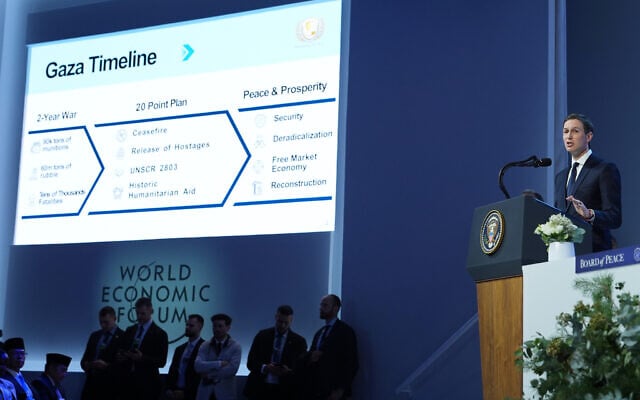
Board Will Complement the United Nations, Not Replace It
Many world leaders are becoming increasingly uneasy as a result of the statement. Important European allies have so far avoided contact. Britain declared it would “not be joining at present,” while France declared it would turn down the invitation. Italy’s government had constitutional concerns about joining any organization controlled by a single nation, while Norway and Sweden also declined. Yvette Cooper, the Foreign Secretary of the United Kingdom, told the BBC that Russia’s President Vladimir Putin had been invited and that Britain would not sign on Thursday due to legal issues. “We have concerns about President Putin being part of something which is talking about peace, when we have still not seen any signs from Putin that there will be a commitment to peace in Ukraine,” she stated [14]. Germany, Japan, and Canada, among other US allies, have not made a commitment (Canada stated it was “in principle” interested, pending details). Even the UN has a restricted role: according to U.N. spokesperson Rolando Gomez, the UN would only interact with the board in that context. A Security Council resolution from November allowed the board solely as a temporary Gaza government through 2027.
European Allies and UN Express Reservations About the Board
Suggestions that his board would replace the UN were dismissed by Trump. In Davos, he emphasized collaboration, stating that the Board of Peace will work coupled with the United Nations to create a safer future for the world. He told reporters outside the summit that it might. However, experts point out that the composition of signatories highlights a geopolitical change: early signatories include Asian and Middle Eastern countries, as well as Belarus’s Alexander Lukashenko, who has long been disliked by the West. The first two foreign dignitaries to sign the charter, Sheikh Salman bin Hamad Al Khalifa of Bahrain and Nasser Bourita of Morocco, flanked Trump during the ceremony, demonstrating the support of the Abraham Accords partners for his Gaza proposal. While Palestinian officials have approved a US-backed committee for Gaza to be supervised by the new board, Israeli Prime Minister Benjamin Netanyahu, who has disputed some aspects of Trump’s Gaza peace plan, stated he would accept an invitation to join.
Board Membership, Funding, and Geopolitical Implications
Trump’s larger foreign policy narrative was emphasized throughout the event. He reiterated long-standing assertions that his administration has “ended” or “contained” conflicts worldwide in both his Davos speech and a public forum. “I think the combination of the Board of Peace with the kind of people we have here could be something very, very unique for the world,” he remarked, framing the organization as a more successful substitute for current international organizations. Additionally, Trump used the event to reevaluate other foreign issues. He highlighted transatlantic tensions by announcing he had secured a “framework” arrangement on Greenland after imposing tariffs on European partners. A growing “transatlantic rift” over the US’s unilateralist attitude has been highlighted by the board initiative itself, which has been a topic of discussion inside NATO and the EU. Opponents fear that the board may realign power relations outside of the conventional “rules-based order” by bringing in authoritarian or anti-Western personalities alongside sympathetic democrats (like Orban of Hungary). On the other hand, Trump’s supporters contend that it gives sluggish peace initiatives a boost. Trump stated at Davos, “We are committed to making sure that Gaza is demilitarized, properly governed, and beautifully rebuilt,” adding that putting an end to “decades of suffering” in Gaza will serve as a model for the rest of the world.
Trump Highlights Board as Model for Global Peace Initiatives
Determining its breadth is now a real challenge for the Board of Peace. Beyond the humanitarian catastrophe in Gaza, where authorities declared that Egypt’s Rafah gateway would reopen next week for the first time since 2024, Trump hinted that its purview might extend to other areas. A permanent board member status will demand contributions to its fund, according to U.S. ambassador Steve Witkoff and other advisors, highlighting the $1 billion price tag for influence. China and Russia both have veto power at the UN and have expressed caution, so how they respond is still very important. Putin commended Trump’s initiative “to resolve the pressing problems of the humanitarian situation in the Gaza Strip” and stated that Russia was examining the invitation. China has not yet responded. In the upcoming weeks, it will be determined if the Board of Peace is merely another topic of East-West rivalry and bargaining at the UN or if it develops into a significant new platform for diplomacy.