

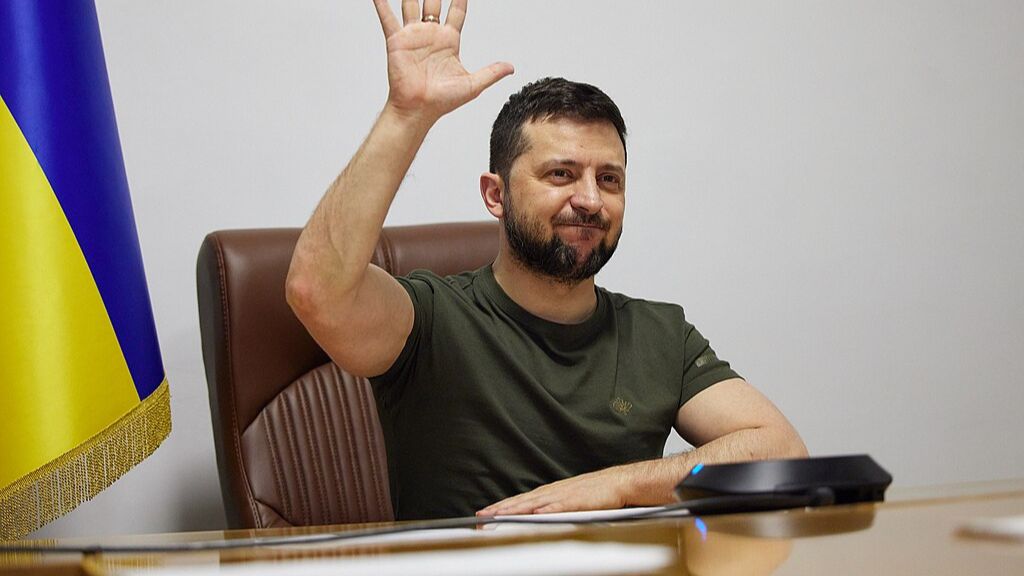
Volodymyr Zelenskiy, the president of Ukraine, said reporters on Sunday that a U.S. security guarantees document for Ukraine is ready and Kyiv just needs a time and location to sign it. For us, the United States’ assurances of security come first. The document is 100% ready, he stated, adding that it will be delivered to the Ukrainian parliament and the US Congress for confirmation after it was signed. Zelenskiy claimed that several “problematic issues” in the peace framework have decreased following U.S.-brokered negotiations with Russia in Abu Dhabi.
What the US Security Guarantees Entail
The U.S. document is a component of a larger 20-point plan that Russia, the United States, and Ukraine are negotiating to put an end to the almost four-year conflict. The United States officially supported an international “coalition of the willing” in early January to provide Ukraine with legally enforceable security guarantees. Allied leaders, including US envoys Steve Witkoff and Jared Kushner, agreed to provide guarantees that Ukraine would receive strong backing “in the event of another attack by Moscow” during a conference in Paris on January 6. The security measures are “as strong as anyone has ever seen,” according to U.S. mediator Witkoff, who told reporters that they are designed to prevent further Russian attacks and protect Ukraine if necessary. Kushner, his counterpart, emphasized the assurance of U.S. support by stating that Ukrainians must have “robust deterrence” and “real backstops” following any agreement.
According to observers, the package may actually contain new penalties against any aggressor, diplomatic efforts, and military, intelligence, and logistical support. For instance, the leaders promised to “finalize binding commitments” to support Ukraine’s defense and specifically referenced “military capabilities, intelligence, and logistical support” in their declaration. A U.S.-led ceasefire monitoring effort utilizing drones, sensors, and satellites to confirm any ceasefire was also described by U.S. officials. The leaders of Europe went one step farther and signed a proclamation for a future Multinational Force for Ukraine. In order to aid in reconstruction and prevent further attacks, Britain and France will send thousands of troops to Ukraine after a truce was established. To put it briefly, the guarantees would strengthen Kyiv’s security position beyond sporadic military shipments by obliging the United States and its allies to defend Ukraine in the event that Russia strikes again.
Such assurances are important to the Ukrainian government. Zelenskiy stated in Vilnius that Ukraine’s survival depends on Western security promises. He also referred to Kyiv’s membership in the European Union by 2027 as a economic security guarantee, connecting these security pledges to Ukraine’s longer-term integration with the West. (President Biden and Zelenskiy signed a 10-year U.S.-Ukraine defense agreement last summer to strengthen Ukraine’s deterrence; formal language in the new document would reaffirm that commitment.)
Timeline of Talks and Signing
Zelenskiy’s declaration coincides with increased diplomatic efforts. In order to develop the 20-point U.S. peace proposal, Ukrainian and Russian negotiators convened in Abu Dhabi on January 23–24 under U.S. mediation. Although no formal ceasefire was reached, both parties claimed that the negotiations revealed less reasons of contention than previously. Zelenskiy said that military delegates from the United States, Russia, and Ukraine were seated at the table for the first time in “quite a long while.” Ukraine’s territorial integrity remained the major point of contention: Zelenskiy reaffirmed that although Kyiv “has not budged” from defending all of its territory, “Moscow wants to get Ukraine to abandon eastern regions” that it has not yet totally occupied. According to him, all mediators must look for a compromise because the two sides have “fundamentally different positions.”
According to Zelenskiy, the U.S. security guarantees document was prepared before to these negotiations. On January 23, he informed Reuters that he was only waiting on Trump that is, U.S. envoys Steve Witkoff and Jared Kushner, who were acting on behalf of former President Trump to set a signing date. He reiterated similar message while in Vilnius, stating that Kyiv is awaiting its partners’ final schedule. Zelenskiy stated that the agreement would be referred to both the U.S. Congress and the Ukrainian parliament for ratification before it could become operative.
Moscow’s Response and Geopolitical Impact
Russia has not officially responded to the U.S. draft as of this announcement. However, the Kremlin’s position is unambiguous: any agreement must require Ukraine to give up land. President Putin informed U.S. negotiators in Abu Dhabi on January 22 that a peace agreement cannot be reached until Ukraine leaves the areas of the east that Russia annexed. According to Reuters, Zelenskiy vehemently opposes Putin’s explicit demand that Ukraine cede almost 20% of its Donetsk area. Western assurances would have to deal with Russia’s insistence that no NATO military enter Ukraine. Indeed, there is now “no sign” that Moscow would agree to a settlement framework based on the suggested guarantees from the West [20]. Dmitry Peskov, the spokesperson for the Kremlin, even recently declined to engage in negotiations with an EU official, indicating Russian resistance to foreign intervention.
The anticipated promises have significant ramifications for NATO and Europe. They reinforce the deterrence against Russia by indicating that the United States is willing to formally commit to Ukraine’s defense, even under future administrations. In Paris, European leaders emphasized their solidarity with the United States. For instance, Macron and Starmer openly played down concerns about depending on a deal supported by Trump. If fulfilled, the agreements would strengthen security ties since Ukraine would rely on official guarantees similar to an alliance vow rather than just constant weaponry transfers. However, experts warn that these assurances could incite Moscow and must endure domestic politics, particularly U.S. congressional approval. Kyiv needs solid guarantees since Russian attacks on Ukraine’s energy infrastructure have already escalated. The drafted paper is currently viewed by the leader of Ukraine and his allies as a significant step toward peace with U.S. support. Finalizing the wording, getting it signed, and determining whether Russia will finally participate in a plan it has long opposed will be the real test.