



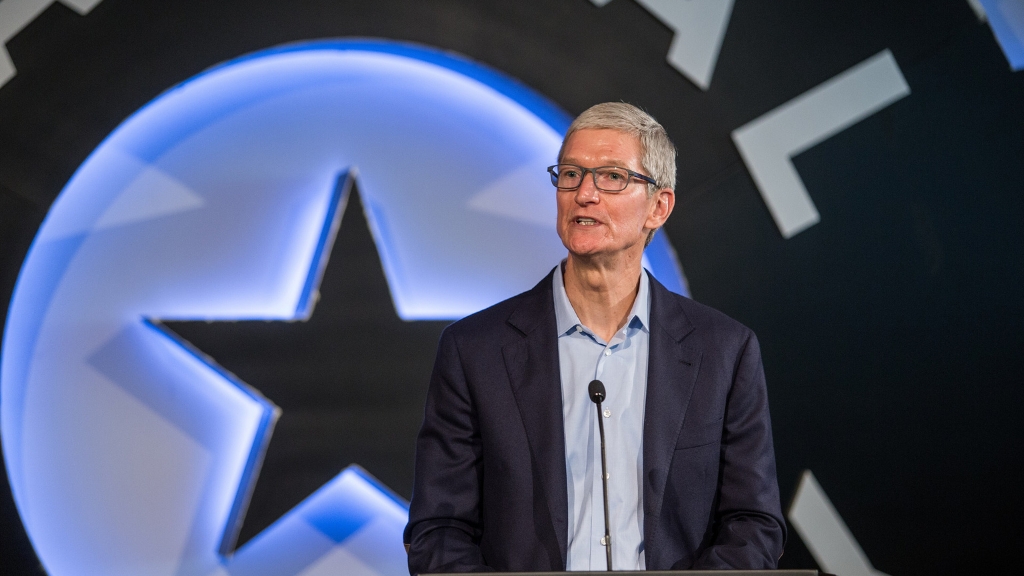
Tim Cook Apple leadership set the company as a new kind of corporation in the modern technology age. Tech leadership analysis is given below:
Steve Jobs transferred control to Tim Cook in 2011; there was no shortage of skeptics. Would not someone who was all about spreadsheets and logistics fail to create drama and excitement like Jobs had done?
Yet in fifteen years since, the truth is clear. As Tim Cook Apple Leadership increased the market capitalization to $4 trillion and over 2.5 billion active Apple devices around the world, one of the top story in Apple stock growth history.
The departure of Tim Cook from CEO duties in April 2026, with hardware specialist John Ternus taking over as the new CEO, marks the close of one of the most important eras in corporate America.
Here is the story behind Tim Cook’s tech leadership analysis, and how it affects every American with an iPhone, Apple Watch, or stake in Apple stocks.
The Transition: From Steve Jobs to Tim Cook
Apple stood on a vision. Jobs created products that people did not even realize they needed: Macs, iPods, iPhones, and more, with a religious fervor. However, at the time of his death in October 2011, the company, after revival by Jobs from bankruptcy, was valued at around $348 billion and relied solely on the iPhone for its reputation.
In other words, Cook came to Apple through a very different path. In 1998, Cook joined Apple via an invitation from Jobs to help fix its supply chain and revive Apple’s ecosystem strategy. Besides, Cook was brilliant at that; he transformed the company’s manufacturing process to optimize profits and make Apple unbeatable in that department.
Tim Cook strength was never in duplicating Jobs. Instead, Tim Cook Apple leadership was about creating systems that would outlive any one individual’s genius.
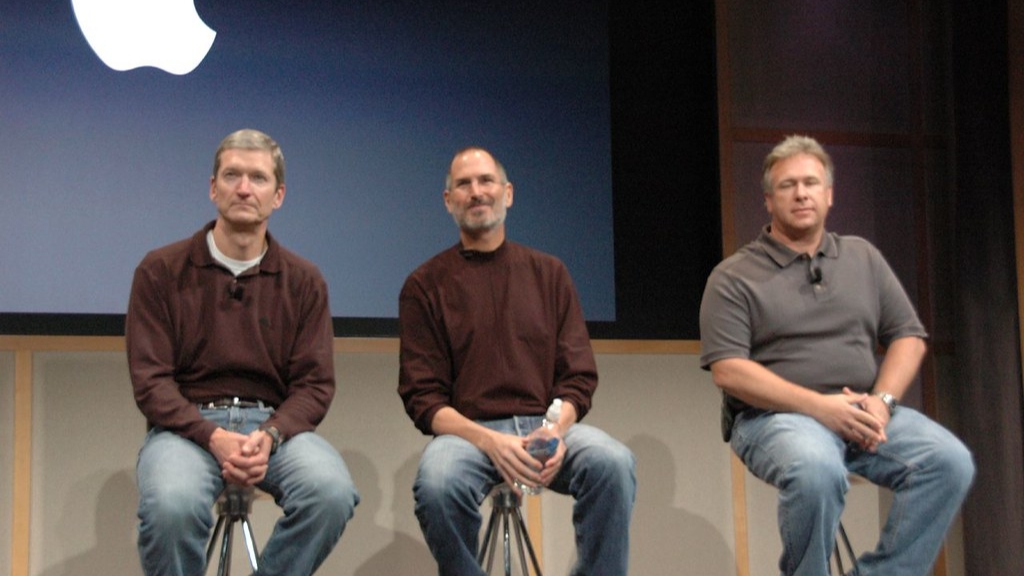
Tech Leadership Analysis: What Changed Under Tim Cook
The most significant thing about Cook was his Structural Transformation. He improved Apple service growth by not solely relying on the hardware. Over time, Apple Music, iCloud, App Store, Apple Pay, Apple TV+, and Apple Care became part of the multi-billion-dollar business worth $109 billion per year. This has become the company’s second-largest business segment and generates margins superior to those for hardware.
Cook also grew Apple’s Product Portfolio. The Apple Watch that first emerged in 2015 looked like a weird gadget at best. However, by 2025, Apple Watch sales were over 30 million units per year, outperforming all Swiss watchmakers’ total production. Similarly, AirPods, which were introduced in 2016, turned into one of the most popular consumer electronics products.
Finally, Cook allowed transition to the Apple chips that Steve Jobs did not complete strengthening Apple ecosystem strategy. In 2020, Apple announced its intention to replace its Intel processor base with Apple Silicon CPUs. By 2023, Apple was able to make Mac computers among the fastest personal computers available.
From Operations to Innovation: Apple Ecosystem Strategy
While Cook’s operational expertise was initially considered an impediment, it turned out to be Apple’s key competitive advantage.
Operational Excellence
Cook transformed Apple’s international logistics:
- Shortened cycle times for inventory
- Increased profit margins
- Facilitated worldwide product launches
Due to operational excellence, Apple’s service growth is reliable even amid global disruptions.
Innovation Enabler
Cook properly planned the innovation:
- Switching from Intel microchips to Apple’s own silicon series marked a pivotal shift, resulting in better efficiency, longevity, and vertical integration.
- Apple created a cohesive platform where devices and services complement one another, fostering customer loyalty.
- With capabilities like an electrocardiogram and health monitoring, Apple positioned itself as a force in the health tech industry.
Cook did not hinder innovation; he organized modern Apple ecosystem strategy.
Tim Cook Apple Leadership: What Cook’s Apple Means for Everyday Americans
At this point, for most Americans, Apple is not merely a technology company; it’s an infrastructure. You use iPhones to manage your health, communicate with your loved ones, conduct business, and buy your morning latte. At this time, every decision by Cook affects you financially, impacts your privacy, and changes your daily life.
Your Financial Health
Apple impact on US economy is vast. If you own an index fund, then you already own Apple. As of 2025, Apple is among the largest stocks listed in the S&P 500 and Nasdaq. Firstly, Market capitalization increased by over 1,050% under Cook’s leadership, significantly boosting American investors’ retirement funds, 401(K)s, and college savings plans. Moreover, Apple paid back dividends worth more than $30 billion in one quarter of 2025 alone.
Your Privacy
Under Cook’s leadership, Apple made privacy into a selling point while everyone else turned their businesses into big surveillance operations. Likewise, features like App Tracking Transparency, on-device machine learning, and end-to-end encrypted messages are all significant contributions by Apple to the security of its users on the internet.
Daily Life
At this point, the seamless integration between iPhone, iPad, Mac, Apple Watch, and AirPods has become a hallmark of Cook’s tenure. Moreover, iMessage, AirDrop, Handoff: These are not just apps but an a part of Apple ecosystem strategy.
Employment and Economy
Apple is responsible for providing jobs to more than 150,000 Americans. Particularly, by diversifying its supply chain and producing iPhones in India, along with shifting the manufacture of all Macs, iPads, and AirPods to Vietnam, Cook has indicated the future of Apple away from dependence on China.
How Cook Reshaped the U.S. Tech Landscape
As Cook turned privacy into an essential selling point in marketing, Google, Meta, and the like were forced to react. However, Privacy features on all major platforms during the decade have partly been reactions by competitors to Apple’s position.
Moreover, Apple Silicon triggered a competition around chips. As a result, Microsoft quickened its efforts towards creating its custom silicon. Secondly, Qualcomm also changed its trajectory on Snapdragon chips. So, there is no doubt that the company behind the chip controls the user experience.
Cook made subscriptions for hardware companies a common practice. Apple’s service bundling trained tens of millions of Americans to pay a recurring amount for a basket of digital offerings.
Leadership Style Comparison
Steve Jobs
- Visionary, product-focused
- Top-down, closed, passionate
- Introduced new market categories from scratch
- Established Apple’s legendary brand identity
- Worked on gut feeling and aesthetic intuition
- Short stint, massive influence
Tim Cook
- Systemic, ecosystem-focused
- Calm, consensual, systematic
- Developed further existing market categories
- Established Apple’s service and health care identity
- Worked on data and strategic vision
- Extended tenure, compounded influence
Apple innovation vs Steve Jobs, the contarst is clear as Steve created a platform. Tim Cook created a civilization upon that platform. The Apple under Tim Cook has made more money, earned more profits, and returned more shareholder value than ever before.
Major Wins and Fair Criticisms
MAJOR WINS
- Market capitalization from $348B to $4T peak
- Apple service growth revenue increased $109B per year
- Apple Silicon is revolutionizing its chip offerings
- The Apple Watch outperforms Swiss watches
- Privacy established as brand principle
- Successfully weathered the storms of COVID, geopolitical conflict, and trade disputes
FAIR CRITICISMS
- Relatively slow introduction of new product categories
- Slow, inconsistent adoption of AI compared to competitors
- Continued heavy reliance on iPhone revenue streams
- App Store disagreements with the European Union
- Revenue risks associated with doing business in China
- Commercial failure of Apple Vision Pro
The criticism regarding the slow development of artificial intelligence for Apple is the most timely. As of the end of 2022, Apple was notably lagging in the realm of generative AI, and while its Apple Intelligence initiative from 2024 was impressive, it was also a little too late.
The Bigger Trend in Tech
As a result of Tim Cook Apple leadership, the company transitioned from being a product firm to becoming a platform firm and even a utility. With over 2.5 billion devices in use, anything Apple does regarding privacy settings, chip design, or artificial intelligence has repercussions throughout almost every industry within the United States economy.
If Apple makes changes in terms of app permissions to track users, the advertising industry takes notice. Moreover, if the tech giant integrates health monitoring capabilities into the Apple Watch, the healthcare industry will pay attention. Furthermore, if they develop their own payment system, Apple Pay, the finance sector will adjust.
Future Outlook
John Ternus inherits a fortune. With Cook gone, Apple had a $109 billion business built on annual services revenue, an unrivaled silicon timeline, more than 2.5 billion devices in an installed base, and a brand of privacy unmatched by any competitor.
However, the questions that remain are big ones:
- Can Apple make up for its shortcomings in generative AI technology without abandoning its principles of privacy?
- Has Apple come up with its next hardware category beyond wearables?
- Did Apple withstand a growingly unfriendly regulatory landscape in both America and Europe?
Therefore, these challenges will determine whether Cook’s remarkable legacy turns out to be even more remarkable or starts to unravel gradually.
Conclusion
A Case Study in Modern Tech Leadership Analysis
The Tech leadership analysis shows Tim Cook’s 15 years at Apple aren’t just a business story. They’re a case study in a particular kind of leadership excellence, one that is less visible than genius but arguably more durable. He took the world’s most iconic tech company at its most precarious moment and systematically built systems, services, and supply chains that compounded into one of the most valuable enterprises in human history.
Revenue grew from $108 billion to $416 billion. Net income grew eightfold. Market capitalization grew more than tenfold. Services went from an afterthought to a $109 billion business. And through it all, Cook made privacy into a genuine competitive advantage.
He didn’t invent the iPhone. He made sure a billion people would never want to leave it.
Frequently Asked Questions
How did Tim Cook transform Apple?
Tim Cook Apple leadership turned company into a software-as-a-service firm. With Cook’s vision, Apple created a $109 billion service revenue segment consisting of Apple Music, iCloud, App Store, Apple Pay, Apple TV+, designed the Apple Watch, created AirPods, designed Apple silicon, and introduced privacy as a competitive advantage. In Cook’s tenure, revenue increased fourfold, rising from $108B to $416B.
Is Apple more successful under Tim Cook compared to Steve Jobs?
From a financial perspective, Apple was significantly more successful under Tim Cook’s leadership, achieving remarkable success in terms of market capitalization, net income growth, and value as the highest valued publicly listed firm in the world. Steve Jobs laid the groundwork for success, creating the iPhone. Cook took this and built an empire. Both were critical roles.
What is Apple’s greatest accomplishment within the last 15 years?
Apple’s services division may be the company’s most strategic move within the past 15 years, turning a hardware firm that sells products into one that earns recurring revenue from its 2.5 billion active customers. Apple’s proprietary silicon technology development follows a close second in terms of importance.
How is Apple affecting the U.S. economy?
Apple is a company that employs over 150,000 employees in the USA and is the biggest constituent of the S&P 500 Index. Under the leadership of Tim Cook, Apple’s market cap has increased by 1,050%, boosting the retirement savings of countless Americans who have invested in Apple stocks or index funds. Its App Store helped many American companies and developers.
Has Apple maintained innovation throughout the years?
Apple under Tim Cook has become more focused on improving established technologies rather than inventing revolutionary products. Yet, Apple Silicon, health features of Apple Watch, and AirPods lineup are some examples of real innovation. At present, Apple’s lagging behind competitors in AI technology is considered the company’s weak point.