

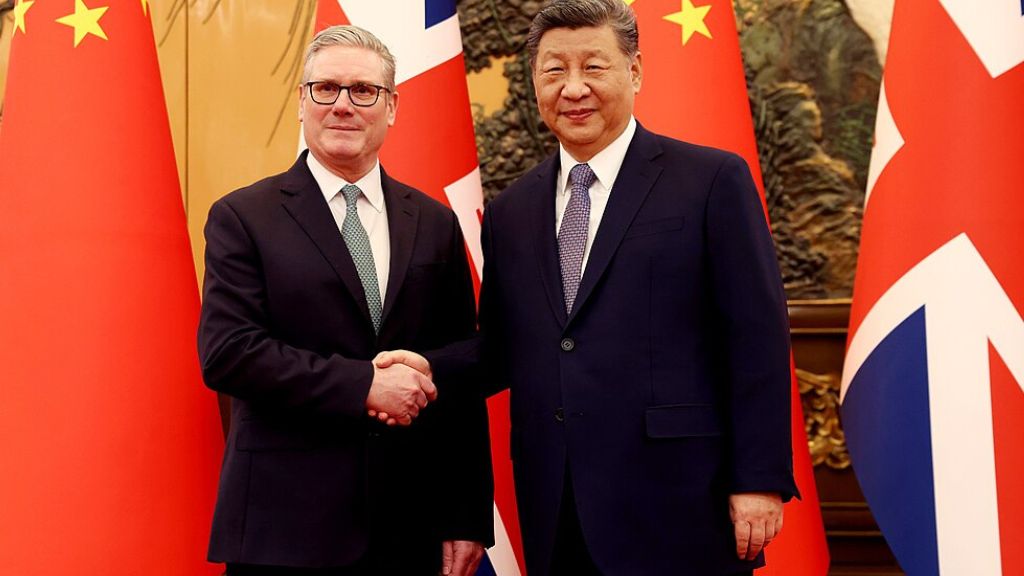
Keir Starmer is in China on a high-profile visit which is designed to help push for greater trade relations, enable greater regional stability and re-engage long-term strategic communications between London and Beijing.
The visit is part of the effort by the UK government to reassess its policy towards China in line with what officials have called “pragmatic and disciplined” engagement. China is one of the world’s largest economies and major trading partners of the United Kingdom, especially in the fields of goods, financial services and new technologies. UK officials say the trip is centered on economic opportunity and keeping national security and values a safeguard.
Trade is the key to Starmer’s agenda. Discussions will be expected around market access for British businesses, investments flows and collaboration in a range of areas such as green finance, clean-energy and advanced manufacturing. British business groups carried out in 2015 reported that more transparency and political dialogue have been missing to unlock sustainable commercial engagement with China.
Beyond economics, Starmer is also focusing on the topics of stability and dialogue. UK officials say that the discussion of this trip includes global security issues, climate change and the function of international institutions. While on some issues, like human rights and regional security, differences persist, the UK government has created dialogue as a tool to manage differences – not escalate them.
China, for its part, has welcomed the visit as a sign of renewed engagement coming from one of Europe’s major economies. According to analysts, Beijing has tried to build closer ties with European states in an overall context of geopolitical fragmentation and economic cooperation as a stabilizing force.
International responses to the visit have been wary of, but closely engaged with, the visit. Some of the European partners have made it clear that there should be more coordination in how they deal with China. Policy experts told me that engagement must be balanced with realism when it comes to strategic competition. Starmer has recognised the concerns, saying that the UK would try to pursue engagement “with open eyes and firm principles.”
The trip highlights a larger change in tone more than a wholesale change in policy. Starmer’s government seems determined to re-establish structured dialogue with China after years of strain, without resorting to dependence or slavish following. For London, the difficulty of finding a way to translate the new type of diplomatic contact into concrete economic benefits without compromising security commitments or alliances.
As international power relationships continually shift, Starmer’s visit reflects the UK’s effort to position itself as an actor of pragmatism-the idea that it is willing to do business with China on trade and stability but has a clear understanding of where its boundaries are.