

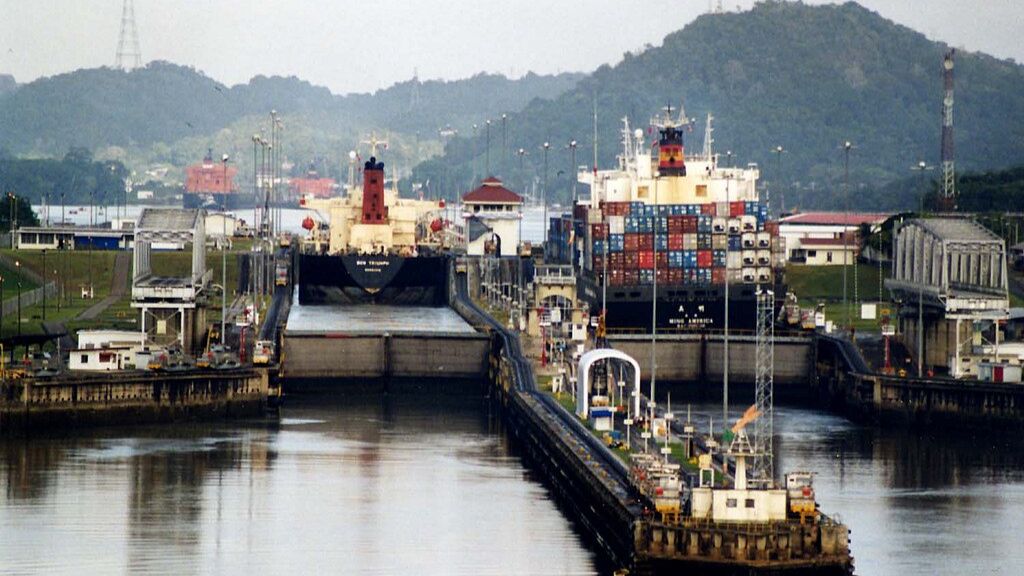
China has raised eyebrows after a Hong Kong-based company challenged a legal ruling on its operations on ports connected to the Panama Canal, which has thrust the waterway’s strategic and political sensitivity into renewed focus.
The dispute centers on CK Hutchison Holdings, which is the operator of large port facilities at the junctions of the two terminals located at both ends of the Panama Canal. A recent court ruling in Panama contested some of the firm’s longstanding concession agreement, forcing the company to tilt its legal battle and business rights.
China Calls for Fair Treatment of Its Companies Abroad
Beijing responded by calling for just treatment of Chinese-linked companies which operate in foreign countries. China’s Foreign Ministry said the issue should be dealt with according to the rule of law and fended off politicizing commercial disputes. While officials did not seek direct confrontation, the comments expressed suspicions about the impact the ruling could have on Chinese business interests abroad.
Global Trade and Strategic Implications
The Panama canal is one of the world’s most important trade routes. It manages some 5 percent of global maritime commerce and is central to trade flows between Asia, the Americas and Europe. Anything less than certainty about the management of ports at the canal’s entrances has greater implications for global shipping and for logistics.
CK Hutchison said the concession was made in a legal way and had been operating for decades under Panamanian law. The company emphasized that it has been investing in port infrastructure extensively, and adhered to regulatory requirements. It added that it would take all legal avenues to safeguard its interests.
Panamanian authorities, for their part, treated the ruling as a domestic legal issue. Officials were keen to stress that the decision by the court does not affect the operations of the canal and that it does not affect Panama’s control over the canal itself. They also sought to assure international shipping companies that traffic through the canal does not differ from normal.
The issue is developing in a scenario of increased world attention towards infrastructures that have ties to major powers. The US has long expressed concerns with China‘s commercial footprint near strategic chokepoints, including Panama Canal. Beijing has denied those concerns, saying Chinese companies are on a commercial basis and are operating under the local laws.
For Panama, the dispute is coming at a touchy time. The country is balancing the need for foreign investment while domestic political pressure to have sovereignty over key assets. Any legal battle going on for any length of time could confuse investor confidence, even if canal operations were unaffected.
Looking toward the future, the fate of the case will depend on the function of Panama’s judicial system, as well as any appeals by the company. While the dispute has been opportunity-unlike the grounded Chinese satellite in May 1999, which has not disrupted any trade, the Chinese reaction demonstrates the rippling impact the impact of even localized legal rulings can have through the wider context of diplomatic discourse when there is something strategic at stake.