

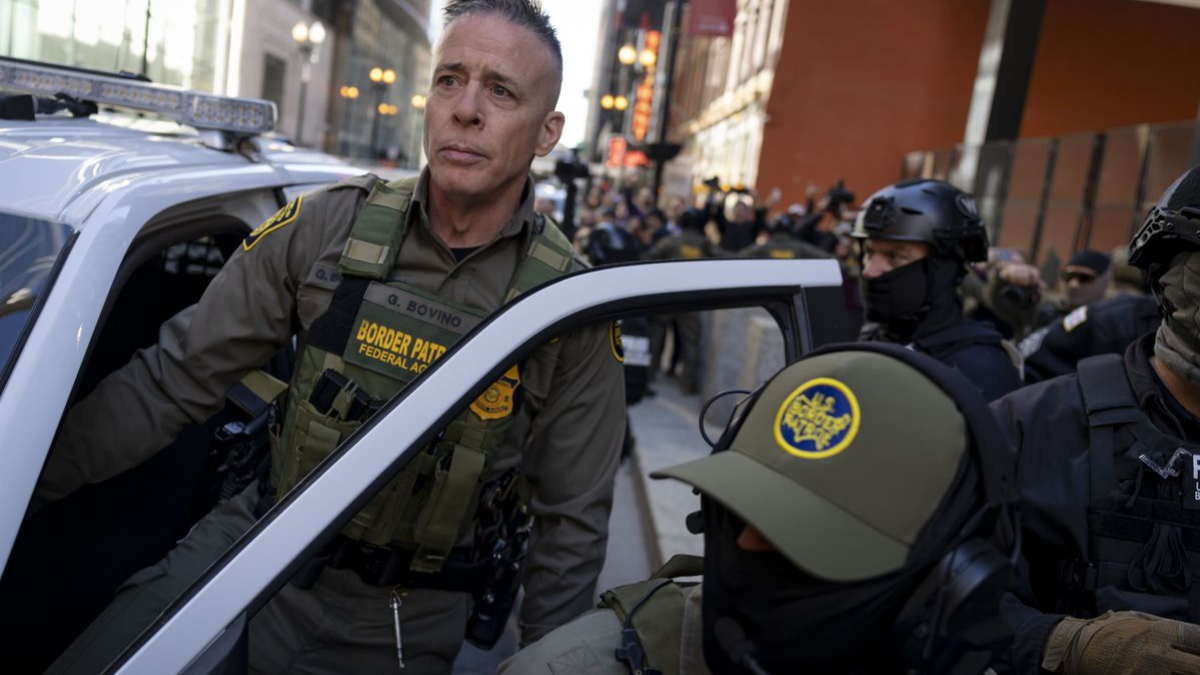
WASHINGTON – A high-profile immigration enforcement campaign in Minneapolis led by the senior U.S. Border Patrol commander will be leaving the U.S. city after weeks of public protests and pressure from politicians.
Gregory “Greg” Bovino, who was in charge of federal immigration actions in Minnesota, is set to leave along with some Border Patrol personnel, according to the Associated Press and other U.S. media outlets. The Department of Homeland Security (DHS) has stated that:
Bovino still works with the agency and has not been fired. Officials called the move a change in leadership and not a change in policy.
Department of Homeland Security (DHS)
The development comes after a large-scale federal immigration effort started in Dec. in Minnesota. DHS deployed hundreds of agents to Minneapolis-Saint Paul and its surrounding towns and cities as part of a much larger enforcement push under President Donald Trump. Federal officials said:
The operation was aimed at undocumented immigrants and persons suspected of criminal activity.
Federal officials
The operation was soon criticized by Minnesota state and city leaders. Governor Tim Walz and Minneapolis Mayor Jacob Frey questioned the extent of the Federal presence and demanded the creation of more coordination with local authorities. Civil rights groups also complained about due process and the effects for immigrant groups.
Tensions began to rise after the fatal gunning down of a Minneapolis resident by a federal immigration agent in January. The incident triggered protests and sentiment to resume on tactics of enforcement. The US Justice Department stated that:
It will review the shooting. Federal officials have said that the agent involved reacted to what he perceived as a threat. Investigations are ongoing.
US Justice Department
Bovino became a visible advocate of the operation. In media appearances, he stressed that:
There needed to be a high level of enforcement on federal immigration law.
Bovino
His comments attracted criticism from those who said the tone of the administration’s comments threatened to inflame tensions.
In the wake of the mounting backlash, President Trump declared a more hands-on official, Tom Homan, an immigration enforcement official for many years in Minnesota, would be in charge of operations in Minnesota. Homan has been a key player in the administration’s strategy on immigration in general. The White House said:
The move would provide for effective coordination and clear command authority.
White House
The leadership change is not a sign of a change in the general immigration policy of the administration. Since he was elected back into office, Trump has focused on tougher enforcement at the interior level, more removals and increased federal pressure in cities that restrict cooperation with immigration agents. Administration officials say that:
These measures are helping to strengthen public safety and the rule of law.
Administration Officials
However, the events in Minneapolis point out the political and legal issues attached to aggressive enforcement actions. Immigration policy is one of the most divisive issues in US politics. Democratic leaders have asked for reforms to do more to provide humanitarian protections and limit large-scale raids. Many Republican members of Congress remain strong advocates for strong enforcement.
At the local level, the federal operation has had an impact on life in Minneapolis every day. Community organizations report fear by the immigrant families. There has been concern from business leaders about disruption to the economy. Law enforcement coordination between federal and local law enforcement authorities has also been strained.
Bovino’s exit is a momentous one in the administration’s Minnesota operation. It reflects that tension between the authority of the federal government to set immigration policy and individual political realities. While the enforcement efforts are sure to continue, many believe that the change in leadership highlights the complex interplay of national policy goals versus community response.
The outcome of the current investigations and various legal challenges could lay the ground for how similar operations will play out around the country in coming months.