

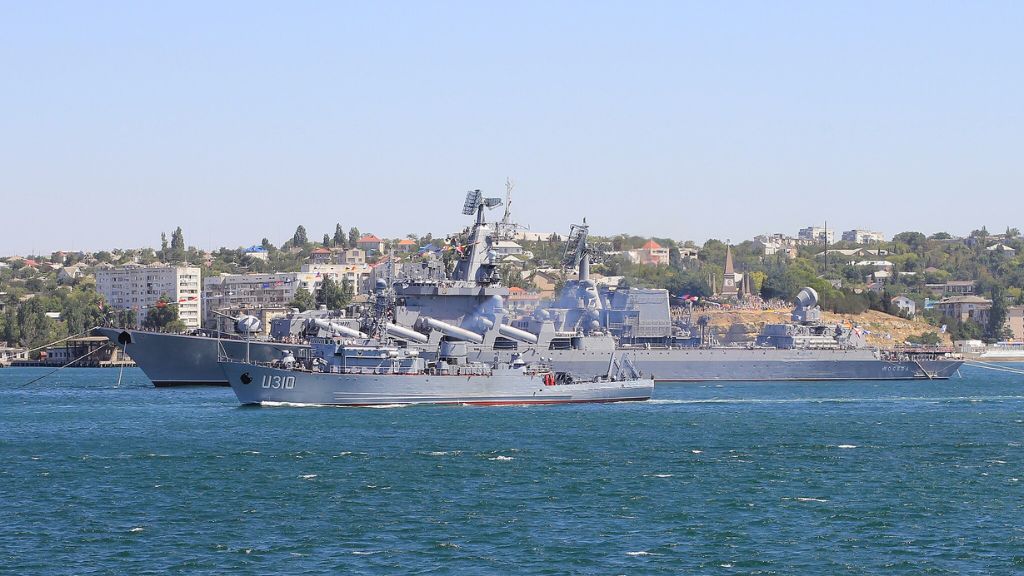
Russia has threatened to act with naval measures if the western governments buy into the issues of Russia’s merchant vessels, which puts alarms to the issue of maritime security and economic sovereignty head-on. The statement comes after renewed discussion among the sanctioning states over more stringent monitoring and inspection of the cargo flows related to the export controls. Attempts to detain or obstruct civilian shipping would be considered escalation, not enforcement, officials say.
Context of Russian Naval Warning
Since the expansion of Western sanctions, shipping has evolved into an important area of economic sanctions. Governments have considered increased compliance check measures to prevent the reaching of sanctioned goods or limited energy cargo reaching global markets.
Measures are likely to blur the delimitation between lawful inspection and coercive interruption to civilian trade.
-Russian officials
The warning comes as discussions on maritime enforcement are heating up in the policy circles. Analysts say this is not just about seizures: even increased inspection regimes can slow cargo down and make the ship operating business more uncertain from the legal perspective. Moscow’s message is an indication that merchant shipping is now viewed as a strategic asset and not merely a commercial activity.
Tensions are particularly sensitive in the context of the Black Sea, already one of the key corridors in the world where military patrols, export controls, and insurance volatility have taken their course. Shipping companies offering to operate in the region face high risk premiums and compliance issues. Governments on all sides insist their actions are a matter of defense, but there is theory to overlap security measures, congestion and friction in diplomatic ties.
Maritime law experts say that civilian shipping lanes rely on predictable standards for their enforcement. Sudden changes in policy, or unilateral inspection might be sources of legal battles and operational stand-offs. This environment creates the risk for miscalculation, especially where naval forces are close to each other.
Implications for Maritime Security and Trade
Any confrontation with merchant ships could ripple out across the entire world trade. Uninterrupted transit for energy shipments, agricultural exports and industrial cargoes. Even isolated incidents have the tendency to increase insurance cost and the cost of freight. Shipping insurers are often quick to respond to perceived instability which may occur before the respective governments step in and help bring results in terms of the availability of the vessels.
Higher transaction costs end up at commodity markets. Importers can look for other routes and put additional logistical pressure on other places. Analysts say there is enough uncertainty – not just physical disruption – to have an effect on pricing and supply planning.
Policy watchers expect diplomatic signalling to pick up as governments do more to draw the limits for enforcement. Legal regimes for inspections and maritime transit will probably be given a fresh look. Commercial operators are pushing for better lines of communication to stop accidents on the sea.
The episode demonstrates how the enforcement of sanctions cuts more and more into naval posture. For policymakers, balancing economic pressure with maritime stability is the major challenge that will determine the shape of shipping security in the coming months.