

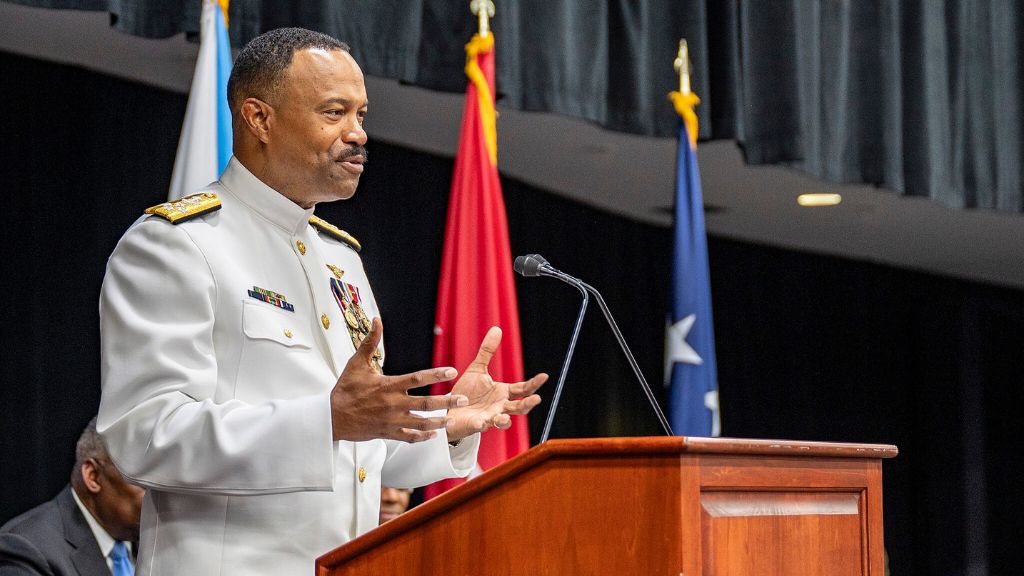
February – On 18th, a high-level military delegation from the US led by General Francis L. Donovan, commander of US Southern Command, makes an unannounced visit to Caracas in Venezuela for security talks with interim Venezuelan authorities. Accompanied by a Pentagon official, Joseph Humire, the delegation met with acting President Delcy Rodriguez and high-level Venezuelan officials to discuss cooperation on counter narcotics, terrorism and migration issues. This visit is the first US military delegation trip to Venezuela since the US pushed over the head of President Nicolas Maduro on drug trafficking charges earlier in 2026.
Background of US–Venezuela Tensions
Bilateral relations between the United States and Venezuela have been severely strained for years. Under the rule of the current Maduro government, Caracas and Washington came into conflict over charges of corruption, human rights violations and political oppression. Sometime in late 2025 and early 2026, the U.S. stepped up military pressure in the Caribbean, through maritime interdictions and strikes against alleged drug trafficking networks – the latest tactic in what is an overall effort by the U.S. to combat the flow of narcotics into the United States.
The January 2026 operation leading to the capture of Maduro in Caracas by the US forces was an extreme escalation, raising issues of Venezuelan sovereignty and norms of international behaviour. Against this background, the visit, near-secret, of a high official of the US military force has symbolic and strategic significance, which would indicate a move from confrontation to engagements in operation and a dialogue.
During the Caracas meetings, both parties reportedly discussed ways of bilateral cooperation, especially targeting the issues of illicit drug trafficking, terrorism, and irregular migration, which are regional security priorities for both countries. Venezuelan officials stressed diplomacy as the mode of political preference adopted in managing bilateral differences. The talks followed other high-level U.S. engagements with Venezuelan interim authorities including visits by U.S. diplomatic officials.
The visit was also amid wider US military deployments in the region, including sustained military operations such as naval and coast guard forces in the Caribbean Region for interdicting drug shipments and disrupting criminal networks. These operations have been controversial, attracting legal and geopolitical debate concerning the scope and impact of those operations.
Implications for Regional Security and Diplomacy
This unannounced trip is a sign of realistic opportunities for the U.S.-Venezuela relations, despite the fact that formal diplomatic relations between the two states remain complicated. By engaging directly with Venezuelan leadership on security issues the United States could be attempting to overcome cooperative projects borrowed out of innate cooperation on common challenges, and in doing so to provide carrot and stick dialogue that integrates Caracas into hemispheric (inter-American) frameworks on counter-narcotic and migration management.
For the U.S. sustained engagement, as opposed to isolation, is perhaps what is required to stabilize that region of many transnational criminal activities and create less of an incentive for Venezuelan alignment with U.S. adversaries such as Russia or Iran. For Venezuela’s interim government, cooperating on mutual security interests may offer a pathway to dampen down the tensions with Washington or attract foreign investment or economic relief.
However, there is large-scale political reconciliation to be had, based on an ending of deep-root base conflicts of governance legitimacy and human rights. The U.S. will probably calibrate the further engagement to secure its strategic objectives without compromising the multilateral norms.
The surprise visit of the US Southern Command chief opens a new chapter on bilateral security dialogue that may forecast humane cooperation on regional security priorities. Moving forward, analysts will monitor the extent that this engagement is translated into formalized security partnerships, the extent of implementation on agreed areas, and how the political disagreements between and within both capitals are overcome.